

PMJDY, PMJJBY and PMSBY 2026: ₹456 a Year for ₹4 Lakh in Combined Cover
PMJDY, PMJJBY and PMSBY are three names most people have heard scattered across bank counter posters and government ads without ever connecting them into what they actually are — a genuinely coherent starter kit for basic financial security. We've written about the bigger-ticket schemes on this blog, Ayushman Bharat's senior citizen cover among them, but these three sit underneath almost everything else. Without a bank account, you can't receive most government benefits at all, and without the two insurance schemes layered on top, most low-income households have genuinely no life or accident cover whatsoever. Official scheme data is maintained by the Department of Financial Services under the Ministry of Finance.
What actually surprised us researching this piece was the total cost involved — ₹436 plus ₹20 a year, ₹456 total, for ₹4 lakh in combined life and accident coverage. That's a number worth sitting with for a second before we get into the details.
Table of Contents
- PMJDY: The Account Everything Else Sits On
- PMJJBY: ₹436 a Year for ₹2 Lakh Life Cover
- PMSBY: ₹20 a Year for ₹2 Lakh Accident Cover
- Putting All Three Together
- How to Actually Enroll in All Three
- What Happens When a Claim Is Actually Filed
- Who Should Genuinely Prioritize This
- Frequently Asked Questions
PMJDY: The Account Everything Else Sits On
PMJDY is the foundation on which all other government schemes for financial inclusion and social security in India are built. Without a bank account, citizens cannot receive Direct Benefit Transfers, cannot enrol in PMJJBY or PMSBY, and cannot contribute to APY. The scheme provides a zero-balance bank account, a free RuPay debit card, insurance coverage up to ₹2 lakh through that card, and direct crediting of government subsidies.
PMJDY — National Numbers (2026)
| Total Beneficiaries | 58.77 crore |
| Total Balance in Accounts | ₹3,12,413.78 crore |
| Bank Mitras (branchless banking agents) | 13.55 lakh |
| Eligibility Age | 10+ years |
| Minimum Balance Required | ₹0 |
Any Indian citizen above 10 years of age is eligible, which genuinely makes this one of the most broadly accessible financial products in the country — no income test, no minimum deposit, and an account that stays open and functional even at a zero balance, unlike most regular savings accounts that eventually penalize you for that.
The 13.55 lakh Bank Mitra network deserves its own mention here, since it's genuinely what makes this scheme functional in areas without a physical bank branch nearby. These are essentially branchless banking agents — often local shop owners or designated individuals equipped with a handheld device — who can open accounts, process deposits and withdrawals, and handle basic banking transactions on behalf of a partner bank. For rural households far from the nearest branch, the Bank Mitra is often the actual, practical access point to everything discussed in this article, not the branch itself.
PMJJBY: ₹436 a Year for ₹2 Lakh Life Cover
The Government of India created PMJJBY to give affordable life insurance to its citizens. If someone dies under this scheme, their beneficiaries receive a life cover of ₹2 lakh. In the unfortunate event of the insured person's death due to any cause — not just accidents — the nominee receives the insurance amount.
Anyone between the ages of 18 and 50 with a savings account at a bank or post office can take part. Any NRI having an eligible bank account with a bank branch located in India is also eligible for purchase of PMJJBY cover, subject to the scheme's terms — worth knowing if you're managing finances for family members living abroad who still hold an Indian bank account.
The premium isn't always the full ₹436, depending on when you join mid-cycle — enrolling in June, July, or August requires the full annual premium, but enrolling in September through November drops to a pro-rata ₹342, December through February to ₹228, and March through May to just ₹114. The full ₹436 becomes payable again at the next annual renewal, regardless of when you originally joined.
PMSBY: ₹20 a Year for ₹2 Lakh Accident Cover
PMSBY is a government plan that gives Indian citizens affordable accidental insurance, covering accidental death or disability for a period of one year, at a premium of just ₹20 a year. Coverage includes ₹2 lakh for accidental death or total disability, and ₹1 lakh for partial disability.
PMSBY Covers
Accidental death, permanent total disability, and permanent partial disability — specifically accident-related, not death from any cause.
PMJJBY Covers
Death from any cause, natural or accidental — genuinely broader trigger, which is part of why its premium is higher than PMSBY's.
Coverage can only be continued if policyholders renew their subscription by the end of May each year, with the premium withdrawn automatically from the beneficiary's savings account — the same auto-debit mechanism PMJJBY uses, which genuinely removes the burden of manually remembering to renew each year, provided the linked account has sufficient balance on the debit date.
Putting All Three Together
| Scheme | What It Does | Annual Cost | Cover |
|---|---|---|---|
| PMJDY | Zero-balance bank account | Free | Up to ₹2L accident (via RuPay card) |
| PMJJBY | Life insurance, any cause | ₹436 | ₹2 lakh |
| PMSBY | Accident death/disability | ₹20 | ₹2 lakh (₹1L partial) |
Layered together, someone with all three genuinely has a bank account, a debit card that itself carries accident cover, life insurance covering any cause of death, and a separate accident-specific policy — all for ₹456 a year in combined premium once the free PMJDY account is already open. This is genuinely the closest thing India has to a default financial safety net for someone without access to employer-provided insurance or the income to shop for private policies.
How to Actually Enroll in All Three
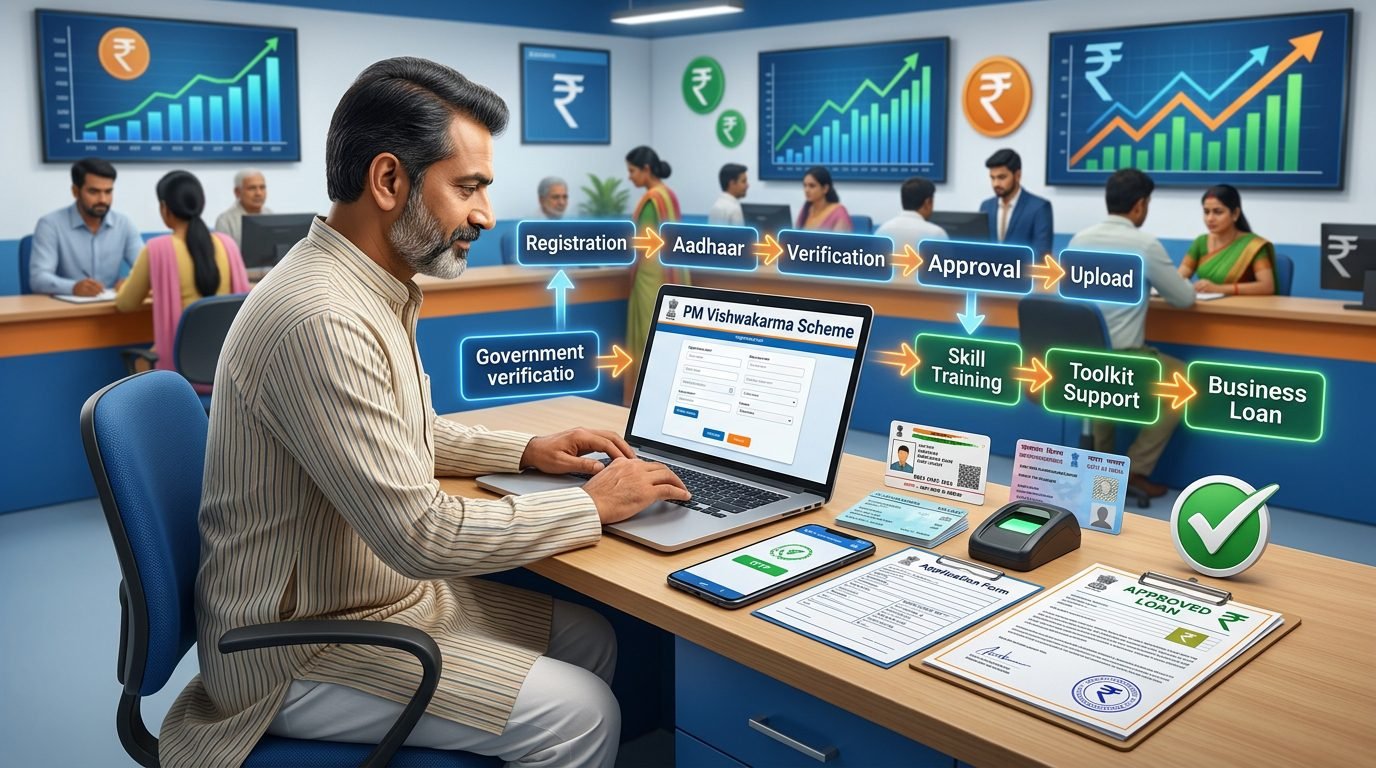
Fill in the PMJDY account opening form, available at bank branches and on bank websites, and submit it — the account is typically opened on the same day. You'll receive your RuPay debit card within 7-10 working days, after which you should link your mobile number and Aadhaar to the account.
Once the account is active, visit your bank branch or log into your bank's internet or mobile banking portal, navigate to the insurance section, and select PMJJBY and/or PMSBY. Give written or digital consent for the annual auto-debit of the premium, and enrollment is complete. For PMJJBY specifically, the process involves entering bank account details, verifying personal information, adding nominee details, and giving consent for the annual auto-debit before submitting the application.
Read: Ayushman Bharat for Senior Citizens 70+ →What Happens When a Claim Is Actually Filed
If the insured passes away during the policy term under PMJJBY, the nominee notifies the bank branch where the policy was purchased, obtains the claim form, fills it out completely, and submits it along with the required documents. For PMSBY, in the event of an accident, the insured or nominee must promptly notify the bank, obtain the claim form from the bank or download it from the official website, and submit it to the bank branch within 30 days of the accident.
The bank verifies the account details and validates the claim form, then forwards the claim to the insurance company within 30 days of submission. This timeline — 30 days to submit, then another 30 days for the bank to forward the claim — is worth knowing upfront specifically because grieving or injured families dealing with a genuine emergency often don't have the bandwidth to research process details at the exact moment they need them most.
Who Should Genuinely Prioritize This
Anyone without an existing bank account — PMJDY should be the very first step, since it's the gateway to essentially every other government financial scheme, including the retirement options we've covered like Atal Pension Yojana.
Sole earners in a household without employer-provided life insurance — ₹436 a year for ₹2 lakh in life cover is genuinely difficult to beat anywhere in the private insurance market, even accounting for the relatively modest sum assured compared to a full private term policy.
Anyone with a physically demanding job or a daily commute with real accident risk — construction workers, delivery riders, drivers, and similar occupations carry meaningfully elevated accident risk, making PMSBY's ₹20 annual cost one of the highest-value, lowest-cost protections available to that specific group.
Frequently Asked Questions
What is the difference between PMJJBY and PMSBY?
PMJJBY is life insurance covering death from any cause, at ₹436/year for ₹2 lakh. PMSBY is accident-specific insurance covering accidental death or disability, at ₹20/year for up to ₹2 lakh.
Do I need a PMJDY account to enroll in PMJJBY or PMSBY?
You need an active bank or post office savings account to enroll in either scheme, and PMJDY is the most accessible way to open one, especially for those without existing banking access.
What is the age eligibility for PMJJBY and PMSBY?
PMJJBY covers ages 18 to 50 at enrollment. PMSBY's eligibility typically extends further, covering account holders up to around age 70.
How do I file a claim under PMJJBY or PMSBY?
Notify the bank branch where the policy was purchased, obtain and complete the claim form, and submit it along with required documents. For PMSBY, this must be done within 30 days of the accident.
Is PMJDY only for people without existing bank accounts?
PMJDY is primarily designed for financial inclusion of the unbanked, but it's also used as the entry point for enrolling in PMJJBY, PMSBY, and other government schemes, even by those who could open a regular account elsewhere.
Can I enroll in both PMJJBY and PMSBY at the same time?
Yes, there's no restriction preventing enrollment in both schemes simultaneously, and doing so provides broader combined coverage for a total annual premium of ₹456.
Our Bottom Line
These three schemes genuinely don't get the attention their coverage-to-cost ratio deserves, largely because none of them individually looks impressive on their own — a zero-balance account, a ₹20 policy, a ₹436 policy. Stacked together, they form a genuinely meaningful safety net for households that would otherwise have none at all, and the total annual cost is low enough that "I can't afford it" is rarely the real barrier — awareness usually is.
For the broader retirement and savings picture these schemes connect to, our Atal Pension Yojana guide and Ayushman Bharat coverage are natural next reads.

Pranab Barman is a Financial Educator and Personal Finance Researcher with over 10 years of hands-on experience in stock markets, trading, and investing. Currently enrolled in the CFA Program, he is committed to continuous learning and professional excellence in finance.
As the Founder of PlayWithStock, Pranab covers a wide range of topics including Mutual Funds, SIP, Taxation, Stock Market Basics, and Financial Calculators — with a focus on simplifying complex financial concepts for everyday all investors.
Email: support@playwithstock.com
Website: playwithstock.com
Related posts:
 Ayushman Bharat for Senior Citizens 70+: The ₹5 Lakh Cover Most Families Still Don’t Know About
 Silver Price Surge 2026: Why Silver Is Beating Gold This Year
 Silver Shortage 2026: Why Prices Crossed ₹2.25 Lakh and Keep Climbing
 Passive Investing in India Just Crossed ₹14 Lakh Crore — Here’s the Index Funds vs Active Funds Math Behind It
 Nifty July Seasonality: Why July Is Nifty’s Strongest Month (27-Year Data)
 Trump Just Gave Indian Pharma a Two-Year Countdown Clock — Here’s What the US Generic Drug Tariff Actually Means
 India IPO Boom 2026: ₹2.65 Lakh Crore Pipeline Explained in Simple Terms
 Gold Price Rally 2026: Why It Jumped 44% and Nears ₹1.45 Lakh