Every quarter, ahead of official earnings announcements, analysts release a Q1 FY27 results preview to estimate what companies might report. This preview helps investors decide whether to hold, buy, or watch carefully before results are announced.
Q1 FY27 (April to June 2026) is now underway, and two sectors are drawing significant attention from the market: Auto and FMCG (Fast-Moving Consumer Goods). Both sectors are driven by very different forces — and understanding those forces can help you make smarter investment decisions.
In this article, we break down exactly what analysts expect from Auto and FMCG companies this quarter, what is driving those expectations, and what you should watch as an investor.
What Is a Q1 Preview and Why Does It Matter?
Type your paragraph here
Before companies officially declare their quarterly results, brokerage firms and research analysts publish earnings previews — estimates based on channel checks, industry data, commodity prices, and management commentary from the previous quarter.These previews matter for three reasons:They move stock prices. If expectations are high and actual results disappoint, stocks can fall sharply — even if the company is fundamentally healthy.They reveal sector trends. Whether rural demand is recovering, whether raw material costs are hurting margins, or whether urban consumption is slowing — a preview tells you the story before the numbers arrive.They help you prepare. As an investor, knowing what analysts expect helps you compare the actual result when it comes out, and judge whether it was better or worse than expected.
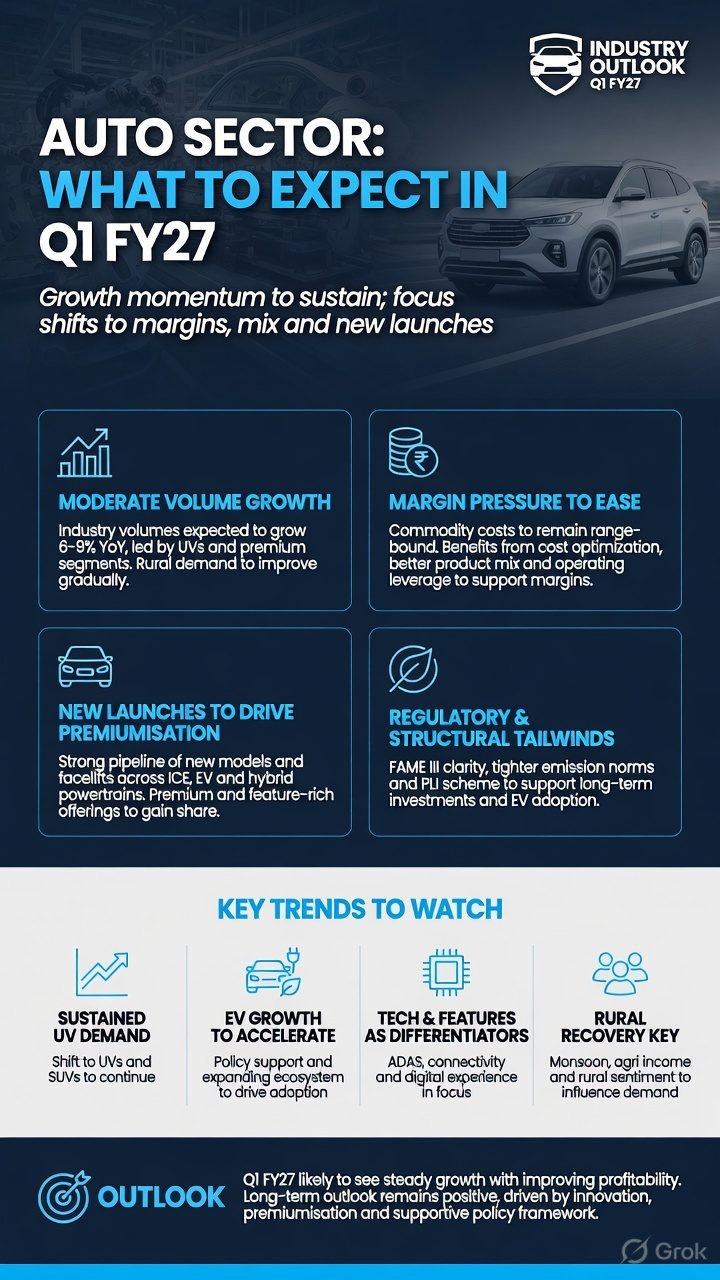
Volume Growth — The Foundation
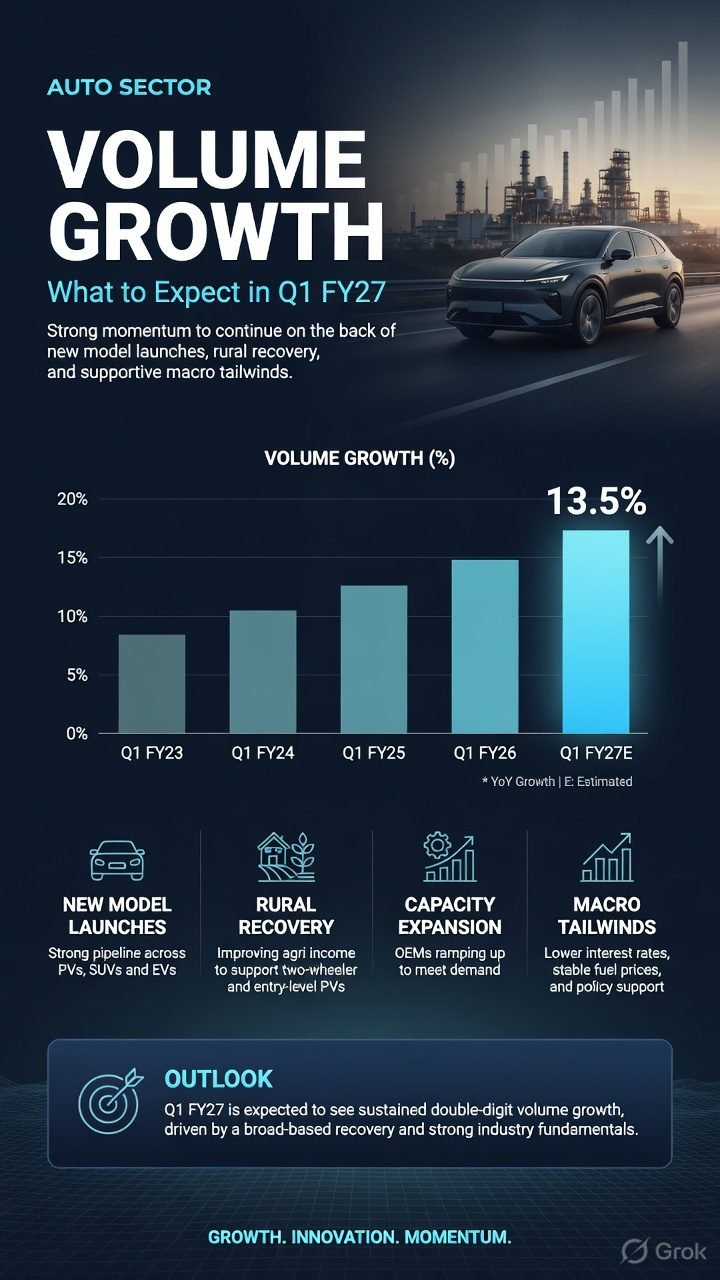
The auto sector’s Q1 FY27 story is primarily a volume story. Two-wheeler (2W) companies are expected to be the star performers this quarter, driven by:
- Strong rural demand — a good monsoon season last year boosted rural incomes, translating into higher entry-level and mid-segment two-wheeler sales
- Seasonal tailwinds — the April-June quarter typically sees decent demand before the monsoon slowdown
- New model launches — several companies launched new variants in the previous quarter that continued selling well into Q1 FY27
Passenger vehicle (PV) volumes are expected to be more moderate. After several strong years of post-pandemic demand, some normalisation is visible. Premium segment demand remains steady, but the mass market faces affordability pressure from elevated vehicle prices and high financing costs.
Commercial vehicle (CV) volumes are likely to be flattish, as infrastructure activity — though high — has not dramatically expanded fleet demand compared to the previous year.
Margin Outlook
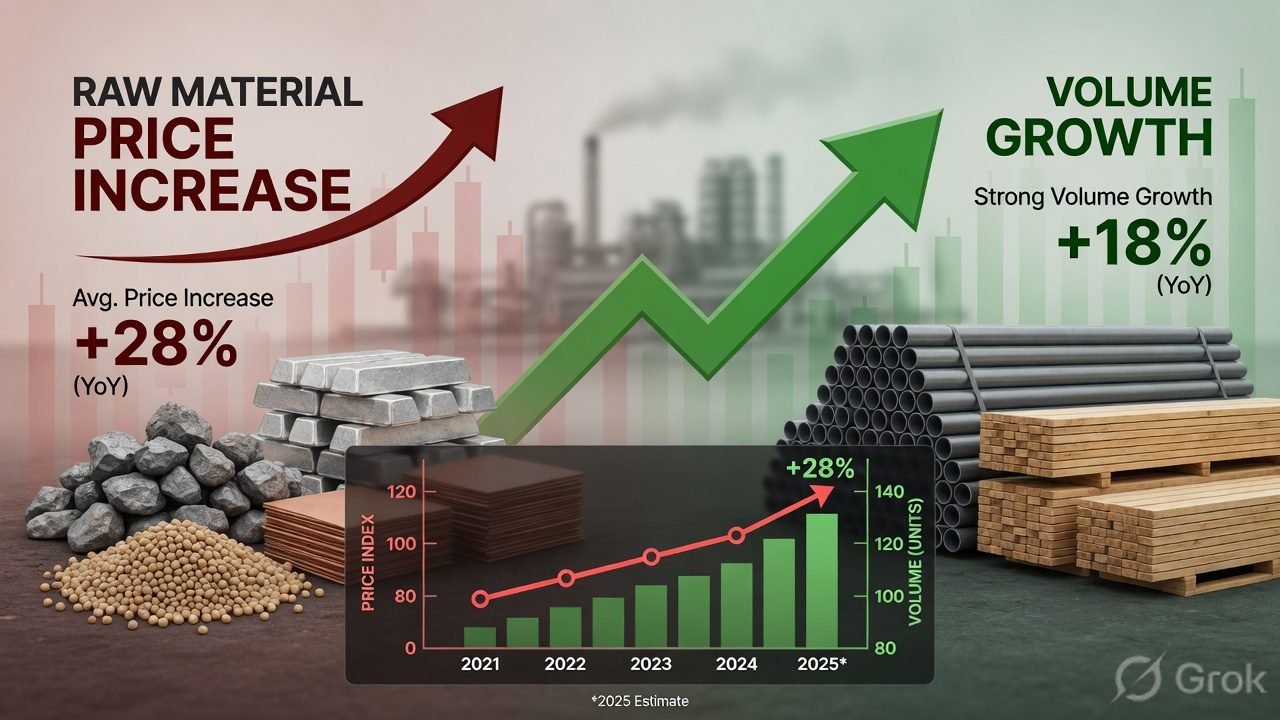
This is where it gets more nuanced. Raw material costs — particularly steel, aluminium, and rubber — have been somewhat softer year-on-year, which is a tailwind for auto companies’ margins. However:
- Currency movements (a weaker rupee raises the cost of imported components)
- Advertising and promotional spends picked up ahead of new launches
- Employee costs continue to rise at most large original equipment manufacturers (OEMs)
The net result is that margins are expected to be largely stable, with some companies showing modest improvement if they have strong pricing power and lower commodity exposure.
Companies to Watch
| Company | What to Watch |
|---|---|
| Hero MotoCorp | Rural demand impact, margin recovery |
| Bajaj Auto | Export volumes, EV transition progress |
| Maruti Suzuki | Passenger vehicle volume, CNG model mix |
| Tata Motors | Jaguar Land Rover (JLR) performance (UK market), domestic CV trends |
| M&M | SUV demand strength, farm equipment segment |
| Eicher Motors | Royal Enfield volumes, premium motorcycle demand |
FMCG Sector: What to Expect in Q1 FY27
*Rural Recovery Is the Key Theme
After several difficult quarters where rural India was under consumption stress, the FMCG sector is watching closely for signs of a sustained rural revival. Early indicators from channel checks suggest:
- Volume growth is gradually returning to rural markets, particularly in staples, soaps, and beverages
- Kirana stores are reporting better off-take compared to Q1 FY26
- The government’s continued focus on welfare spending and rural infrastructure has supported disposable income at the lower end
Urban markets, on the other hand, are showing signs of mild softness — a trend that began in the second half of FY26. Premiumisation demand (from urban upper-middle-class consumers) remains intact, but mass-urban consumption is slightly under pressure due to food inflation.
Raw Material and Margin Dynamics
This is critical for FMCG investors. The quarter saw mixed signals on input costs:
- Palm oil prices — a key input for soaps, edible oils, and several packaged foods — have been elevated, which is a margin headwind for companies with high palm oil exposure
- Crude oil derivatives (used in packaging) remain at manageable levels
- Copra, wheat, and milk prices have been volatile, affecting companies differently based on their product mix
Companies that had taken price hikes in Q4 FY26 will benefit from better realisations flowing into Q1 FY27. However, firms that held prices to protect volumes may see margin compression.
Volume vs. Value Growth
The Street is watching whether FMCG companies are growing through actual volume improvement (more units sold) or merely through price increases (same units at higher prices). Sustained volume growth is considered a healthier signal for the sector’s medium-term outlook.
Analysts broadly expect low single-digit to mid single-digit volume growth for most large FMCG companies this quarter — a modest improvement compared to the same quarter last year, but not yet a full-blown recovery.
Companies to Watch
| Company | What to Watch |
|---|---|
| Hindustan Unilever (HUL) | Volume growth, rural-urban demand split, palm oil impact on margins |
| ITC | Cigarette volumes, FMCG business margin trajectory |
| Nestle India | Premiumisation traction, Maggi volumes |
| Dabur India | Ayurvedic/natural products demand, rural recovery |
| Marico | Parachute coconut oil volumes, copra cost impact |
| Godrej Consumer Products (GCPL) | Domestic volumes, Africa business performance |
What Should You Watch as an Investor?
Whether you already hold stocks in these sectors or are considering adding exposure, here are the key numbers to track when Q1 FY27 results start arriving (typically mid-July to mid-August 2026):
1. Revenue Growth vs. Volume Growth
Always check both. Revenue growing 10% because of price hikes, but volume flat, is very different from revenue growing 10% with 8% volume growth. The second scenario is far healthier.
2. EBITDA Margin
This tells you whether the company is actually becoming more profitable on a core operating basis. Compare it with Q1 FY26 (year-on-year) and Q4 FY26 (quarter-on-quarter) for a full picture.
3. Management Commentary
After results, every listed company holds an earnings call or press conference. What the management says about demand trends, rural recovery, pricing strategy, and the outlook for the next quarter is often more important than the numbers themselves. Read these carefully.
4. Comparison vs. Estimates
A result that looks “good” in isolation may still be a disappointment if it missed analyst expectations. Always compare actual results against consensus estimates.
The Bigger Picture: What These Sectors Tell Us About the Economy
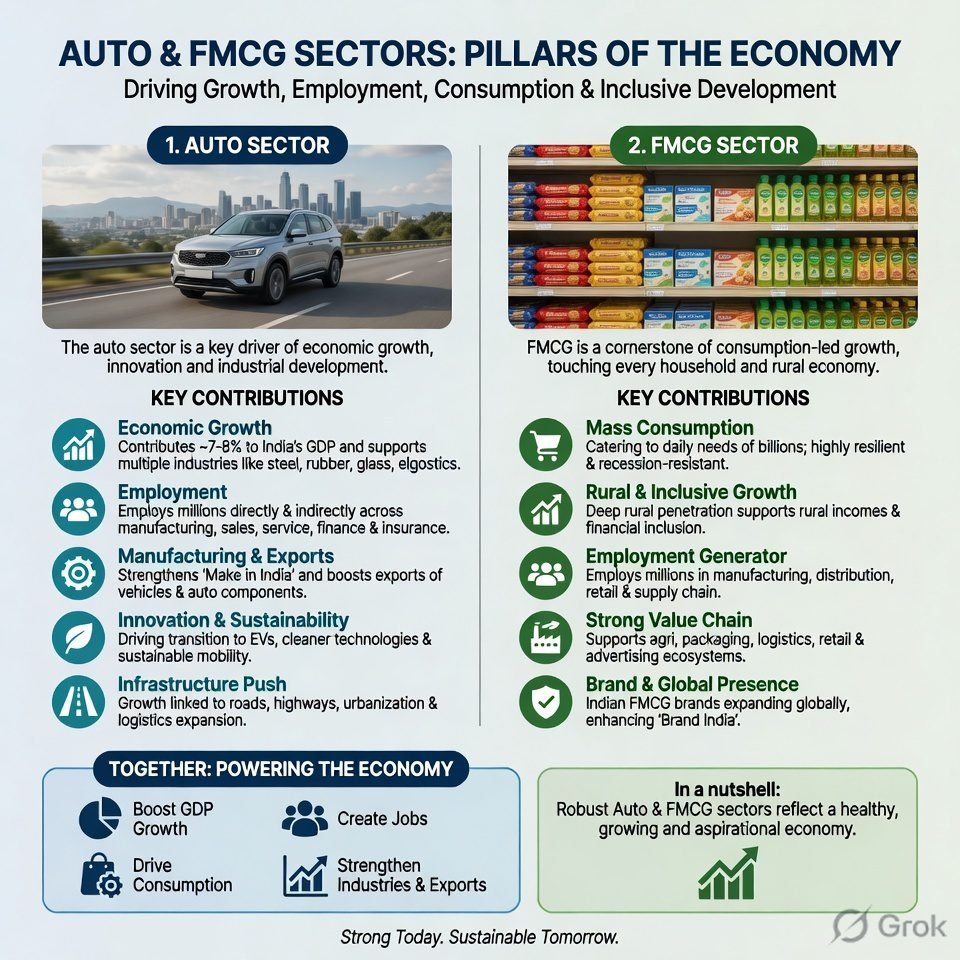
Auto and FMCG together give us a fairly reliable real-time picture of the Indian consumption economy.
- Two-wheeler volumes are one of the best proxies for rural economic health in India.
- Entry-level FMCG volume growth indicates whether the bottom-of-pyramid consumer is spending more.
- Passenger car and premium FMCG demand reflects urban middle-class confidence.
If both auto two-wheelers and rural FMCG volumes are recovering simultaneously in Q1 FY27, it would be a meaningful positive signal for India’s broad consumption story — and likely positive for consumer-facing stocks more broadly.
Key Takeaways
- Auto sector: Two-wheelers expected to lead; passenger vehicles moderate; margins stable with some raw material tailwinds
- FMCG sector: Rural recovery gradually visible; urban softness continuing; palm oil a margin risk for several companies
- Watch for: Volume growth (not just revenue), margin trajectory, and management commentary when results arrive
- Results season timing: Most Q1 FY27 results will be declared between mid-July and mid-August 2026
Frequently Asked Questions (FAQ)
Q1. What is Q1 FY27? Q1 FY27 refers to the first quarter of Indian Financial Year 2027 — which runs from April 1, 2026 to June 30, 2026. Indian companies follow a financial year from April to March.
Q2. Why do analysts release previews before actual results? Analysts track sector data — vehicle sales numbers, Nielsen FMCG data, commodity prices, and dealer channel checks — throughout the quarter. Based on this, they estimate what earnings might look like before the official company announcement.
Q3. What is EBITDA margin and why does it matter? EBITDA stands for Earnings Before Interest, Taxes, Depreciation, and Amortisation. The EBITDA margin (EBITDA as a percentage of revenue) tells you how efficiently a company is operating, before financing and accounting adjustments. It is one of the most widely used profitability measures in quarterly analysis.
Q4. Which auto stocks are best for long-term investors? This article does not provide investment advice. For long-term investment decisions, we recommend studying company fundamentals, reading our Company Analysis section, and consulting a SEBI-registered financial advisor.
Q5. Will FMCG margins improve in Q1 FY27? Margin improvement depends heavily on individual company exposure to palm oil, copra, and other key inputs. Companies with lower palm oil exposure and stronger pricing power are better positioned for margin improvement this quarter.
Disclaimer: This article is for educational and informational purposes only and does not constitute financial or investment advice. Please consult a qualified financial advisor before making any investment decisions. Play With Stock is not responsible for investment outcomes based on information provided here.
Sources: Business Standard Q1 FY27 Earnings Preview — Auto & FMCG (July 2026)

Pranab Barman is a Financial Educator and Personal Finance Researcher with over 10 years of hands-on experience in stock markets, trading, and investing. Currently enrolled in the CFA Program, he is committed to continuous learning and professional excellence in finance.
As the Founder of PlayWithStock, Pranab covers a wide range of topics including Mutual Funds, SIP, Taxation, Stock Market Basics, and Financial Calculators — with a focus on simplifying complex financial concepts for everyday all investors.
Email: support@playwithstock.com
Website: playwithstock.com
Related posts:

Reliance Industries Q1 FY27 Results Preview: What to Expect on July 17

Indian Bank Q1 FY27 Results: Preview, Estimates & What to Expect Today

TCS Q1 FY27 Results: Profit Rises 5%, Sensex Jumps 828 Points

TCS Q1 FY27 Results Preview: Expected Revenue, Profit, Dividend & Key Things to Watch

Bank of Maharashtra Q1 FY27 Results: QIP Update, Business Growth & Preview

Jio Financial Services Q1 FY27 Results Preview: Date, Estimates & Stock Analysis

Big Bank Earnings July 14: Alarming Preview of JPMorgan, BofA & More

Vedanta Demerger 2026: What It Means for Shareholders
1 thought on “Q1 FY27 Results Preview: What to Expect from Auto and FMCG Sectors This Quarter”
uwaUExatcxMVGxtVpvwIIvU