


Q1 FY27 Earnings Season: 140+ Companies — Complete Weekly Results Calendar
More than 141 companies report results between July 13 and July 18, 2026. Here's the full day-by-day schedule, sector breakdown, and what's already confirmed.
Q1 FY27 earnings calendar season has moved into its busiest stretch, with more than 141 companies scheduled to announce results between July 13 and July 18, 2026, according to the BSE corporate calendar. This isn't a spread-out trickle of announcements — it's a genuinely dense week where IT majors, private banks, insurers, and industrial names all report within a handful of trading sessions, making it one of the most information-heavy weeks of the year for Indian equity investors.
We've been tracking this Q1 FY27 earnings calendar day by day as companies confirm their board meeting dates, and this guide is built to work as a living reference: bookmark it, come back to it through the week, and use it to know exactly which names are reporting on any given day without digging through ten different news sites.
ContextWhy This Week Matters So Much
Earnings seasons don't unfold evenly. A handful of companies report early to set the tone — this year that was TCS and HCLTech, both reporting in the first week of July — and then the calendar compresses into a dense middle stretch where the bulk of listed companies cram their board meetings into a two-week window. The July 13-18 stretch is that compression point for this Q1 FY27 earnings calendar.
What makes this particular week unusually significant isn't just the volume of companies — it's the concentration of genuinely large, market-moving names inside it. Reliance Industries, India's most valuable listed company, reports on July 17. The next day, four of India's five largest private banks — HDFC Bank, ICICI Bank, Axis Bank, and Kotak Mahindra Bank — all report on the same Saturday. That's an unusual scheduling overlap, and it means the Nifty Bank index and the broader Sensex are both likely to see outsized single-session moves around these two days, regardless of how the rest of the market behaves.
We'd treat this week less as "one big news event" and more as a sequence of distinct, sector-specific data points that happen to be compressed into six trading days. Reading the IT-heavy Thursday differently from the banking-heavy Saturday, rather than reacting to "how did markets do this week" as one blur, is the more useful way to actually extract information from an earnings season this dense.
There's a structural reason this compression happens every year, and understanding it makes the calendar easier to navigate. Indian companies are required to announce results within 45 days of quarter-end for most listed entities, and 60 days for the year-end quarter. For a quarter ending June 30, that creates a natural deadline pressure around mid-to-late August at the outer edge, but in practice most large, well-covered companies report considerably earlier, within the first three to four weeks after quarter close. Because so many boards schedule their meetings in a similar window — driven partly by auditor availability and partly by convention within each sector — the result is this predictable mid-July crunch, year after year, rather than a smooth, evenly spread reporting calendar.
OverviewQ1 FY27 Earnings Calendar: Full Day-by-Day Schedule
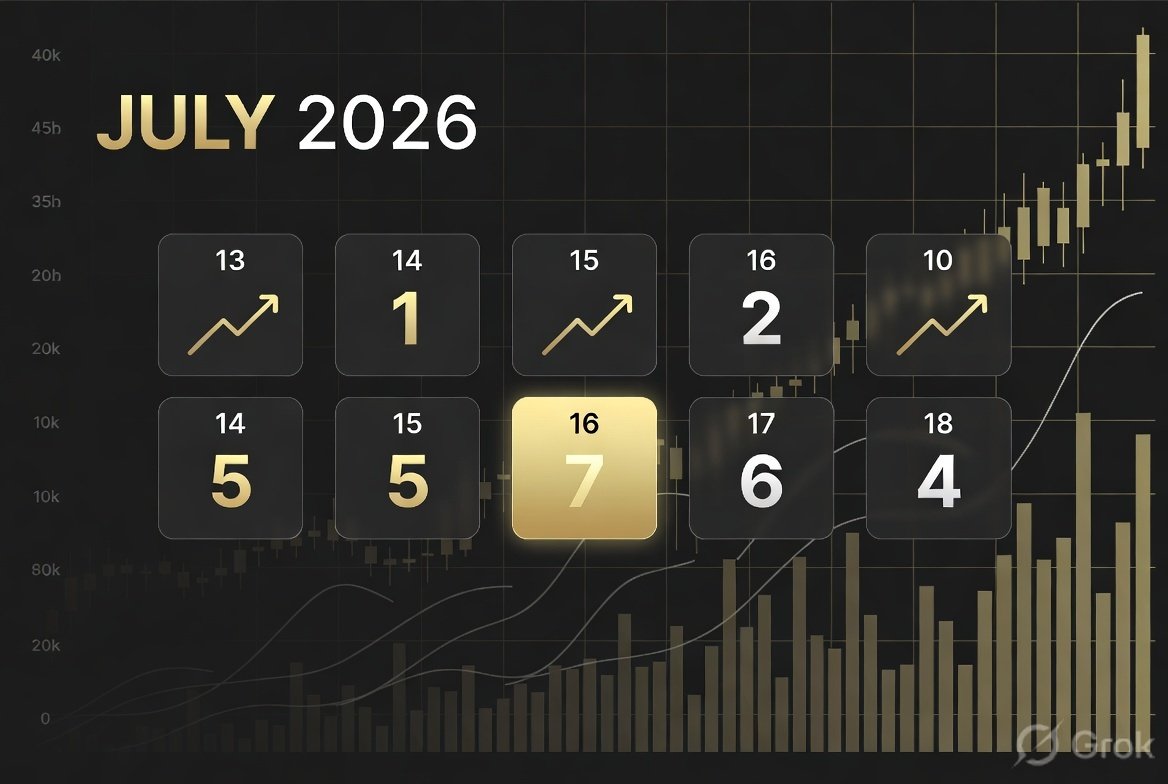
Here's the complete breakdown, based on the BSE corporate announcement calendar. Company counts per day, and the headline names, are as follows:
| Date | Day | Companies | Headline Names |
|---|---|---|---|
| 13 Jul 2026 | Monday | 15 | HCLTech, ICICI Prudential AMC, Bajaj Consumer Care, Nuvoco Vistas |
| 14 Jul 2026 | Tuesday | ~16 | LTTS, Tata Elxsi, Anand Rathi Shares & Stock Brokers, Jindal Saw |
| 15 Jul 2026 | Wednesday | 39 | HDFC Life, HDFC AMC, ICICI Lombard, ICICI Prudential Life, Angel One, Union Bank |
| 16 Jul 2026 | Thursday | 36 | Tech Mahindra, Wipro, Jio Financial Services, Polycab India, BHEL |
| 17 Jul 2026 | Friday | ~20 | Reliance Industries, JSW Steel, Federal Bank, Havells India, Tata Technologies |
| 18 Jul 2026 | Saturday | 10 | HDFC Bank, ICICI Bank, Axis Bank, Kotak Mahindra Bank, Yes Bank |
Total across the six-day window: roughly 136-141 companies, depending on which secondary and micro-cap filings are counted, per the BSE calendar cited by Goodreturns.
This table is deliberately built around headline names rather than an exhaustive list of all 141 companies — for a week this dense, a full list of every micro-cap and small-cap reporter becomes noise rather than signal for most retail investors. If you're specifically tracking a smaller company not listed here, checking that company's individual exchange filing directly, via the NSE or BSE announcement pages, remains the most reliable way to confirm its exact reporting date.
It's also worth noting how the daily company counts shift through the week. Monday and Tuesday together account for roughly 30 companies, a relatively light opening. Wednesday and Thursday alone account for 75 companies, more than half the week's total, making that 48-hour stretch the genuine center of gravity for this Q1 FY27 earnings calendar. Friday and Saturday then taper back down to about 30 companies combined — but as covered below, those final two days carry disproportionate weight because of exactly which companies are reporting, not how many.
Day 1Monday, July 13: The Season Opens
The week's first trading day carries 15 companies into results, led by HCLTech, which had already reported in the prior week's early cluster but continues to shape sentiment into this session. Other names reporting Monday include ICICI Prudential Asset Management Company, Bajaj Consumer Care, and Nuvoco Vistas.
This is typically a lighter day by design — earnings calendars tend to ramp gradually into their busiest midweek stretch, and Monday's relatively short list reflects that pattern. We'd treat Monday less as a major market-moving session and more as a preview of the tone IT and mid-cap names are likely to set for the rest of the week.
Day 2Tuesday, July 14: Mid-Cap IT and Financials
Tuesday's roughly 16 companies lean toward mid-cap IT services and smaller financial names: LTTS (L&T Technology Services), Tata Elxsi, Anand Rathi Shares & Stock Brokers, Aditya Birla Money, Den Networks, and Jindal Saw are among the confirmed reporters.
Tata Elxsi and LTTS are both worth watching specifically if you're trying to read the broader IT services demand signal ahead of the bigger IT names reporting Thursday — both companies operate in specialized engineering and R&D services niches that can sometimes diverge from the broader IT commentary coming out of TCS or Infosys.
Day 3Wednesday, July 15: Insurance and NBFC Heavy Day
Wednesday is the single busiest day of the week by company count — 39 companies report, and the list is dominated by insurance and non-banking financial companies. Confirmed names include HDFC Life Insurance, HDFC Asset Management Company, ICICI Lombard General Insurance, ICICI Prudential Life Insurance, HDB Financial Services, Angel One, Union Bank of India, Fedbank Financial Services, Jana Small Finance Bank, and Mangalore Refinery and Petrochemicals (MRPL).
The insurance cluster reporting on the same day — HDFC Life, ICICI Lombard, and ICICI Prudential Life all together — gives a genuinely useful same-day comparison point for anyone tracking India's listed insurance sector specifically. Unlike bank NIMs, insurance company results are read through a different lens: new business premium growth, claims ratios, and embedded value trends tend to matter more than a simple profit growth number.
Beyond the insurance names, Wednesday's calendar also includes a meaningful cluster of smaller financial names — Jana Small Finance Bank, Steel Strips Wheels, Oriental Hotels, and GTPL Hathway among them — spanning banking, industrials, and media in a single session. This breadth is part of what makes Wednesday the week's busiest day by count: it's less a single-sector spotlight and more a genuinely broad cross-section of corporate India reporting simultaneously.
With 39 companies reporting the same day, we'd focus attention on the largest names first — HDFC Life, ICICI Lombard, and Union Bank of India — rather than trying to track all 39 in real time. A day this dense rewards prioritizing by market cap and relevance to your own holdings over trying to catch every single filing.
Day 4Thursday, July 16: IT Majors and Jio Financial
Thursday brings 36 companies, headlined by two of India's largest IT services companies — Tech Mahindra and Wipro — alongside Jio Financial Services, Polycab India, BHEL, South Indian Bank, Heritage Foods, ITC Hotels, Piramal Finance, and CEAT.
This is arguably the most-watched day of the week for the IT sector specifically. TCS and HCLTech have already reported and set an early tone — TCS posted a 5% YoY profit rise with 14% revenue growth, and HCLTech grew net profit over 20% YoY — so Wipro and Tech Mahindra's numbers on Thursday will either confirm that IT services demand is broadly recovering, or reveal a more uneven picture across the sector's larger players.
Jio Financial Services reporting the same day adds a genuinely different storyline into the mix — as a newer, high-growth NBFC name still building out its lending and asset management businesses, its quarter tends to be read very differently from an established IT major's. The presence of BHEL and Polycab India on the same day also means Thursday offers a useful read on India's capital goods and electrical equipment demand, a segment that tends to be more sensitive to government capex cycles and infrastructure spending than the consumer-facing names reporting elsewhere in the week.
Day 5Friday, July 17: Reliance Industries Takes Center Stage
Friday's roughly 20 companies are led by the week's single most-watched name: Reliance Industries, reporting after market hours (post 3:30 PM). Other Friday reporters include JSW Steel, Federal Bank, Havells India, Tata Technologies, RBL Bank, Oberoi Realty, Poonawalla Fincorp, and Tatva Chintan Pharma.
Reliance's results alone tend to move the broader Sensex and Nifty given the company's sheer index weight, and brokerages have been closely tracking three specific segments ahead of this report: Oil-to-Chemicals (O2C) margin recovery, Jio's subscriber and ARPU trends, and Reliance Retail's growth trajectory. We covered the detailed pre-results brokerage estimates separately — see our Reliance Industries Q1 FY27 results preview for the specific numbers analysts are watching for.
Day 6Saturday, July 18: The Banking Mega-Day
The week concludes on Saturday, July 18, with just 10 companies reporting — but the concentration of large-cap names makes it, by weight if not by count, the most significant single day of the entire season. HDFC Bank, ICICI Bank, Axis Bank, Kotak Mahindra Bank, and Yes Bank all report the same day, alongside smaller names like Can Fin Homes, J.K. Cement, India Cements, and Premier Polyfilm.
Markets remain closed on Saturday, which means the actual trading reaction to these four major bank results will play out on Monday, July 20 — giving investors an unusual weekend window to digest four simultaneous large-bank prints before the market has a chance to react. We've built a full comparison of what brokerages expect from each of these four banks — see our HDFC Bank, ICICI Bank, Axis Bank & Kotak Bank Q1 FY27 results comparison for the detailed profit, NIM, and loan growth estimates for each name individually.
Because Saturday's results won't get a same-day trading reaction, we'd use the weekend specifically to compare all four banks' actual numbers against the brokerage estimates before markets reopen Monday — rather than waiting to see how the stock price moves first and reasoning backward from there.
ConfirmedAlready Reported: TCS and HCLTech Set the Tone
Two of the season's most closely watched names reported before this compressed mid-July window, and their numbers are worth knowing as context for everything that follows.
TCS (Tata Consultancy Services) reported on July 9, posting consolidated revenue of ₹72,275 crore, up 13.9% year-on-year, with net profit of ₹13,349 crore, up 4.6% YoY but down roughly 2.7% quarter-on-quarter. The company's order book stood at $9.5 billion in Total Contract Value, and management specifically flagged AI-led deals as a growth driver — annualized AI revenue reached $2.6 billion in the quarter, up 13.6% sequentially. CEO K Krithivasan described the quarter as reflecting "continued growth momentum" despite what he called "geopolitical and macro-economic headwinds," while also noting he expects broader demand to improve in Q2.
HCLTech reported shortly after, posting net profit up 20.3% year-on-year to ₹4,624 crore, on revenue of ₹34,579 crore — a notably stronger profit growth rate than TCS posted in the same period, even though HCLTech is the smaller of the two companies by revenue.
| Company | Reported | Revenue | Net Profit | YoY Growth |
|---|---|---|---|---|
| TCS | 9 Jul 2026 | ₹72,275 Cr | ₹13,349 Cr | +4.6% |
| HCLTech | Early Jul 2026 | ₹34,579 Cr | ₹4,624 Cr | +20.3% |
The gap between TCS's roughly 4.6% profit growth and HCLTech's 20.3% is worth sitting with for a moment. It's a reminder that "IT sector results" is not a single story — even the two companies that opened this earnings season told meaningfully different growth stories, and that divergence is exactly what makes Thursday's Wipro and Tech Mahindra numbers worth reading individually rather than assuming they'll simply extend whichever of the two opening prints was more recent.
Part of that gap comes down to base effect and segment mix rather than a simple "one company is doing better" story. TCS's Q1 FY26 comparison base was already relatively strong, making a 4.6% YoY gain look more modest in percentage terms even though the absolute profit figure — over ₹13,000 crore — remains multiples larger than HCLTech's. HCLTech, meanwhile, benefited from a combination of stronger deal wins and a comparison base that made its growth rate look more pronounced. Reading percentage growth rates alongside absolute profit figures, rather than either one in isolation, tends to give a more complete picture of which company genuinely had the stronger quarter.
Both companies specifically called out artificial intelligence-related revenue as a growth driver this quarter, a theme that's likely to recur across the sector as Wipro, Tech Mahindra, LTTS, and Tata Elxsi report through the rest of the week. TCS's management specifically flagged partnerships with AI infrastructure providers and a $2.6 billion annualized AI revenue run rate as evidence that client spending is shifting toward AI-led transformation projects, even as broader discretionary technology spending remains comparatively subdued. Whether that same AI-revenue narrative shows up with similar strength in the remaining IT majors' commentary this week is one of the more interesting threads to track across the full Q1 FY27 earnings calendar.
Sector ViewSector-by-Sector Breakdown
Looking at the full week's calendar through a sector lens, rather than a day-by-day one, reveals a few clear clusters worth tracking together:
- Information Technology: TCS and HCLTech have already reported; Wipro, Tech Mahindra, LTTS, and Tata Elxsi report through the week. This is the most complete sector cluster in the entire calendar, giving a genuinely full picture of IT services demand once Thursday closes out.
- Banking: The sector's results are split into two distinct clusters — Union Bank of India reports mid-week on Wednesday, while the four major private banks (HDFC Bank, ICICI Bank, Axis Bank, Kotak Mahindra Bank) plus Yes Bank all report together on Saturday. Federal Bank and RBL Bank report Friday, adding a mid-sized private bank data point ahead of the Saturday mega-day.
- Insurance: HDFC Life, ICICI Lombard, and ICICI Prudential Life all report Wednesday — a genuinely useful same-day read across three of India's largest listed insurers.
- NBFCs and Financial Services: HDB Financial Services, Poonawalla Fincorp, Piramal Finance, and Jio Financial Services are spread across Wednesday, Thursday, and Friday, giving a broader but less concentrated read on the lending and financial services space outside traditional banking.
- Industrials and Manufacturing: BHEL, Polycab India, JSW Steel, Havells India, and Tata Technologies span Thursday and Friday, covering capital goods, metals, and engineering names.
- Energy and Conglomerates: Reliance Industries stands largely alone as the week's single largest energy and conglomerate name, reporting Friday.
Reading the calendar this way — sector by sector rather than purely day by day — tends to surface genuinely useful comparisons that a simple chronological read misses. For readers specifically interested in how Indian bank stocks are performing this earnings season relative to global peers, tracking the banking cluster specifically across both Wednesday and Saturday gives a more complete picture than either day alone.
One pattern worth flagging across sectors: the companies clustered earliest in the week (Monday and Tuesday) tend to skew toward mid-cap and specialized names, while the genuinely largest, most index-weighted companies — Reliance Industries, the four major private banks — are positioned toward the back half of the week. This isn't unique to this particular quarter; it's a recurring pattern across most Q1 earnings calendars in India, likely reflecting that the largest companies tend to have more complex, multi-segment results that require additional preparation time before their boards can formally approve and release them. Smaller, more focused companies with simpler reporting structures are often able to finalize and announce results more quickly after quarter-end.

PlaybookHow to Actually Use an Earnings Calendar
An earnings calendar is only useful if you have a system for actually acting on it, rather than passively scrolling through a list of company names. Here's the approach we'd suggest for a week this dense:
- Filter by what you actually hold or are considering. With 141 companies reporting, trying to track every single one is a losing exercise. Start with your own portfolio and watchlist, then expand outward to sector-relevant names only if you have specific time and interest.
- Separate "reported" from "reporting" in your notes. As this week progresses, keep a running distinction between confirmed actual results (like TCS and HCLTech above) and companies still on the calendar to report. Conflating brokerage estimates with confirmed numbers is one of the most common mistakes during a compressed earnings week.
- Read management commentary, not just the headline numbers. A single quarter's PAT beat or miss tends to matter less for a stock's medium-term direction than what management says about the next two to three quarters on the earnings call — demand trends, margin outlook, and specific segment commentary usually carry more forward-looking information than the trailing quarter's number.
- Use same-day sector clusters for comparison. When three insurance companies or four major banks report on the same day, that's a genuine opportunity to compare like-for-like performance under identical macro conditions — a comparison that's much harder to make when results are spread across separate weeks.
- Revisit this calendar through the week rather than reading it once. Given how compressed this window is, checking back on specific days as they arrive — rather than trying to absorb the entire six-day schedule in one sitting on Monday — tends to produce better retention of what actually happened versus what was merely expected.
- Distinguish standalone from consolidated figures. Many large companies, particularly conglomerates like Reliance Industries and diversified financial names like Jio Financial Services, report both standalone and consolidated results. Headlines sometimes cite one figure without specifying which — always check which basis a reported number is on before comparing it against a brokerage estimate.
- Watch for exceptional items and one-off adjustments. TCS's own Q1 FY27 disclosure specifically noted that net income "excluding exceptional items" stood at ₹13,849 crore, a different figure from the ₹13,349 crore headline PAT. Quarterly results frequently include one-time gains or charges that can distort a simple YoY comparison if not checked separately.
- Set a personal cutoff for how many companies you'll track this week. Given the sheer volume on this Q1 FY27 earnings calendar, deciding in advance — say, the 15-20 companies most relevant to your portfolio and watchlist — helps avoid the common trap of spending the entire week reactively checking news rather than doing focused, useful analysis on the names that actually matter to your own decisions.
If you're newer to reading quarterly results generally, our beginner investing guide covers the foundational concepts — like the difference between revenue and profit, or what a YoY versus QoQ comparison actually tells you — that make an earnings calendar like this one meaningfully more useful once understood. Our guide on how the stock market works day to day is also useful background if you're trying to understand why some of these results move NSE and BSE prices differently in the minutes after announcement.
PitfallsCommon Mistakes When Tracking Earnings Season
- ✕Treating "the market" as one entity reacting to earnings season. A 141-company week spans at least six distinct sectors with very different demand drivers. IT services results tell you little about how insurance companies or steel manufacturers are performing in the same quarter.
- ✕Confusing a scheduled report date with an actual result. Several companies in this calendar have merely confirmed board meeting dates — the meeting itself is when results get approved and released, not before. Assuming a company has "already reported" because its date has passed, without checking the actual filing, is an easy mistake during a week this compressed.
- ✕Overreacting to Monday and Tuesday's smaller sample sizes. With only 15-16 companies reporting on the week's opening days compared to 36-39 midweek, drawing broad sector conclusions from Monday's results alone tends to be premature — wait for the fuller midweek data set before generalizing.
- ✕Ignoring the weekend gap after Saturday's bank results. Because markets are closed Saturday, the four major bank results won't get an immediate trading reaction. Assuming "no move yet" means "the market doesn't care" misreads a simple calendar quirk rather than genuine investor sentiment.
- ✕Missing the AI and technology commentary threads. Both TCS and HCLTech specifically flagged AI-related revenue growth as a differentiator this quarter — a theme likely to recur in Wipro and Tech Mahindra's commentary Thursday, and worth tracking as a cross-company pattern rather than a one-off mention.
- ✕Assuming every company on the calendar carries equal weight. A micro-cap name reporting alongside Reliance Industries on the same day does not deserve the same attention purely because both appear on the same list. Weighting attention by market capitalization and portfolio relevance is a more useful filter.
- ✕Reacting to pre-market or after-hours price moves without reading the actual filing. Stock prices can move sharply on headline numbers alone before the fuller results presentation becomes available. Waiting for the complete picture tends to produce better-informed decisions.
Taken together, these mistakes share a common thread: treating a 141-company week as a single, undifferentiated news event rather than a structured, sector-spanning data set that rewards a deliberate, prioritized reading strategy. The companies on this Q1 FY27 earnings calendar didn't choose to report in the same window by coordination — but investors reading their results absolutely can choose to approach that compressed window with a clear, prioritized plan rather than reactive scrolling.
FAQFrequently Asked Questions
Q.How many companies are reporting Q1 FY27 results this week?
According to the BSE corporate calendar, approximately 141 companies are scheduled to announce Q1 FY27 (April-June 2026 quarter) results between July 13 and July 18, 2026.
Q.Which day has the most companies reporting?
Wednesday, July 15, is the busiest single day with 39 companies scheduled to report, followed closely by Thursday, July 16, with 36 companies.
Q.When does Reliance Industries report Q1 FY27 results?
Reliance Industries is scheduled to report on Friday, July 17, 2026, after market hours (post 3:30 PM).
Q.Why do HDFC Bank, ICICI Bank, Axis Bank, and Kotak Mahindra Bank all report on the same day?
All four banks independently confirmed July 18, 2026 board meetings to approve their Q1 FY27 results. While not officially coordinated, this scheduling overlap gives investors a rare same-day comparison point across four of India's largest private banks.
Q.What did TCS report for Q1 FY27?
TCS reported consolidated revenue of ₹72,275 crore, up 13.9% year-on-year, and net profit of ₹13,349 crore, up 4.6% YoY, along with a $9.5 billion order book and $2.6 billion in annualized AI revenue.
Q.How did HCLTech's results compare to TCS?
HCLTech posted stronger year-on-year profit growth than TCS this quarter, with net profit rising 20.3% YoY to ₹4,624 crore, compared to TCS's 4.6% YoY profit growth, even though HCLTech is the smaller company by revenue.
Q.Where can I find results for specific banks or Reliance Industries in more detail?
We've published dedicated preview and comparison articles for the week's biggest names — see our Reliance Industries Q1 FY27 results preview and our four-bank Q1 FY27 comparison for detailed, company-specific estimates and analysis.
Q.Why do so many companies report results in the same two-week window?
Indian listed companies must announce quarterly results within 45 days of quarter-end under SEBI's disclosure norms. Because many companies' boards tend to schedule meetings within a similar window, results naturally cluster into a predictable mid-to-late-July crunch for the June quarter each year.
References
- Goodreturns — Q1 Results Next Week, 13 to 18 July 2026
- Free Press Journal — Q1 FY27 Earnings Week Begins With 70 Companies
- Upstox — Upcoming Q1 Results This Week: Full Calendar
- Multibagg AI — Q1 FY27 Results: 140+ Companies, Key Dates
- Kalkine India — Q1 FY27 Earnings Season: IT Leads Early Prints
- Business Standard — TCS Q1FY27 Results
- Business Today — TCS Q1 Results
- Kotak Neo — Q1 FY27 Results This Week
- TCS Investor Relations — Q1 FY27 Fact Sheet (PDF)
- BSE India — Corporate Announcements Calendar

Pranab Barman is a Financial Educator and Personal Finance Researcher with over 10 years of hands-on experience in stock markets, trading, and investing. Currently enrolled in the CFA Program, he is committed to continuous learning and professional excellence in finance.
As the Founder of PlayWithStock, Pranab covers a wide range of topics including Mutual Funds, SIP, Taxation, Stock Market Basics, and Financial Calculators — with a focus on simplifying complex financial concepts for everyday all investors.
Email: support@playwithstock.com
Website: playwithstock.com
Related posts:
 HDFC Bank, ICICI Bank, Axis Bank & Kotak Bank Q1 FY27 Results: The Complete Comparison
 What is a Stock Split and Why Do Companies Do It
 Reliance Industries Q1 FY27 Results Preview: What to Expect on July 17
 Big Bank Earnings July 14: Alarming Preview of JPMorgan, BofA & More
 TCS Q1 FY27 Results: Profit Rises 5%, Sensex Jumps 828 Points
 Vodafone Idea Stock 2026: The Complete ₹35,000 Crore Guide
 Q1 FY27 Results Preview: What to Expect from Auto and FMCG Sectors This Quarter
 Jio Financial Services Q1 FY27 Results Preview: Date, Estimates & Stock Analysis