

OpenAI IPO 2026:
The $1 Trillion Question
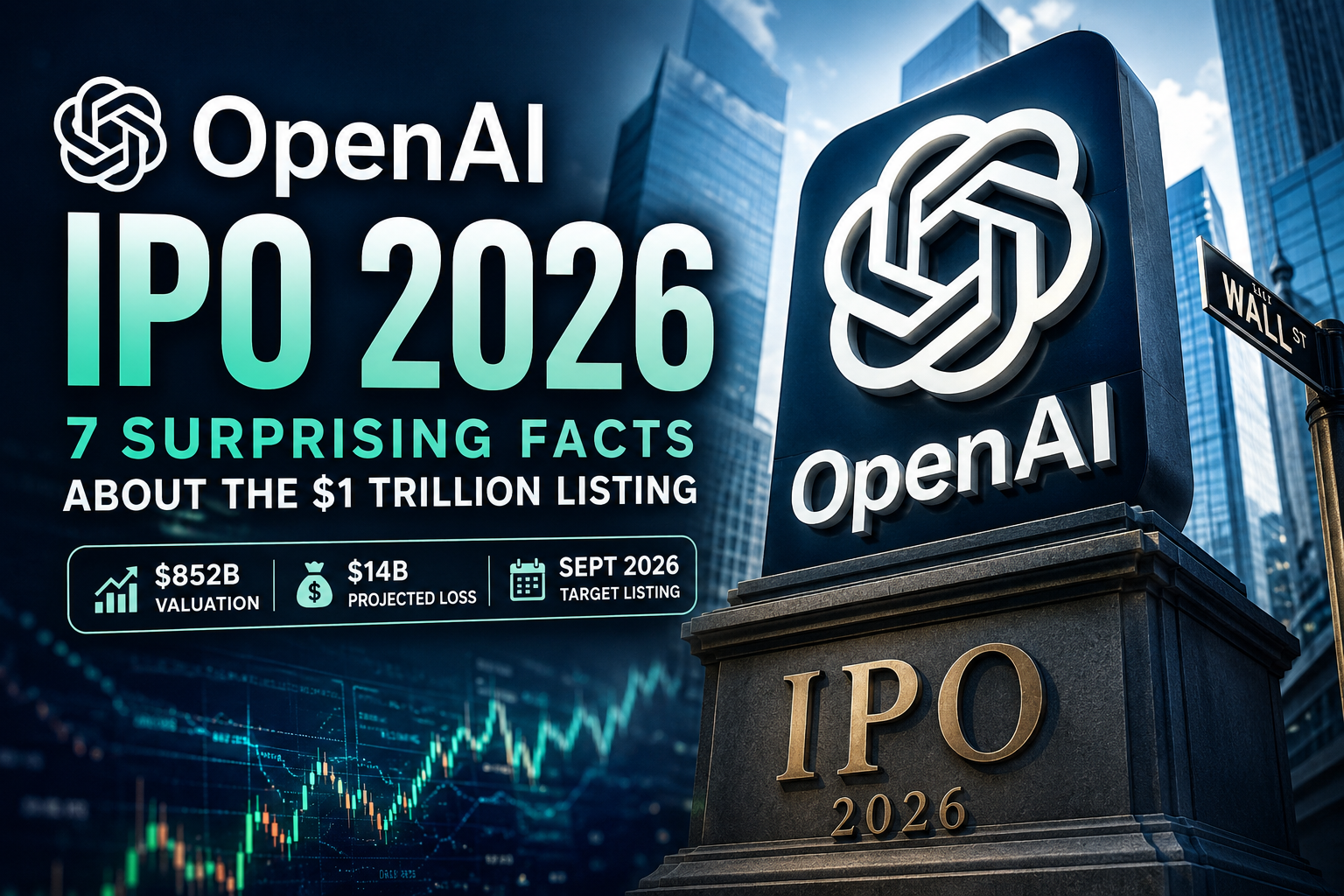
ChatGPT's maker has filed a confidential S-1 with the SEC. A $852 billion valuation. $14 billion in projected 2026 losses.
900 million weekly users. This is either the most important tech listing since Facebook, or the most expensive bet Wall Street has ever placed on a money-losing company.
I use ChatGPT almost every day. Most people reading this probably do too. But knowing a product well and understanding the business behind it are very different things — and the gap between the two is exactly where most retail investors lose money in high-profile IPOs.
This article covers the OpenAI IPO 2026 with the numbers that matter, the risks that are being underreported, and what Indian investors specifically need to know before the listing window opens. We've cross-checked every figure against SEC filings, CNBC reporting, and financial analysis from multiple independent sources — because in this OpenAI IPO story, the difference between a confirmed fact and a credible rumour matters enormously.
Section 01OpenAI IPO: What Actually Happened With the S-1 Filing
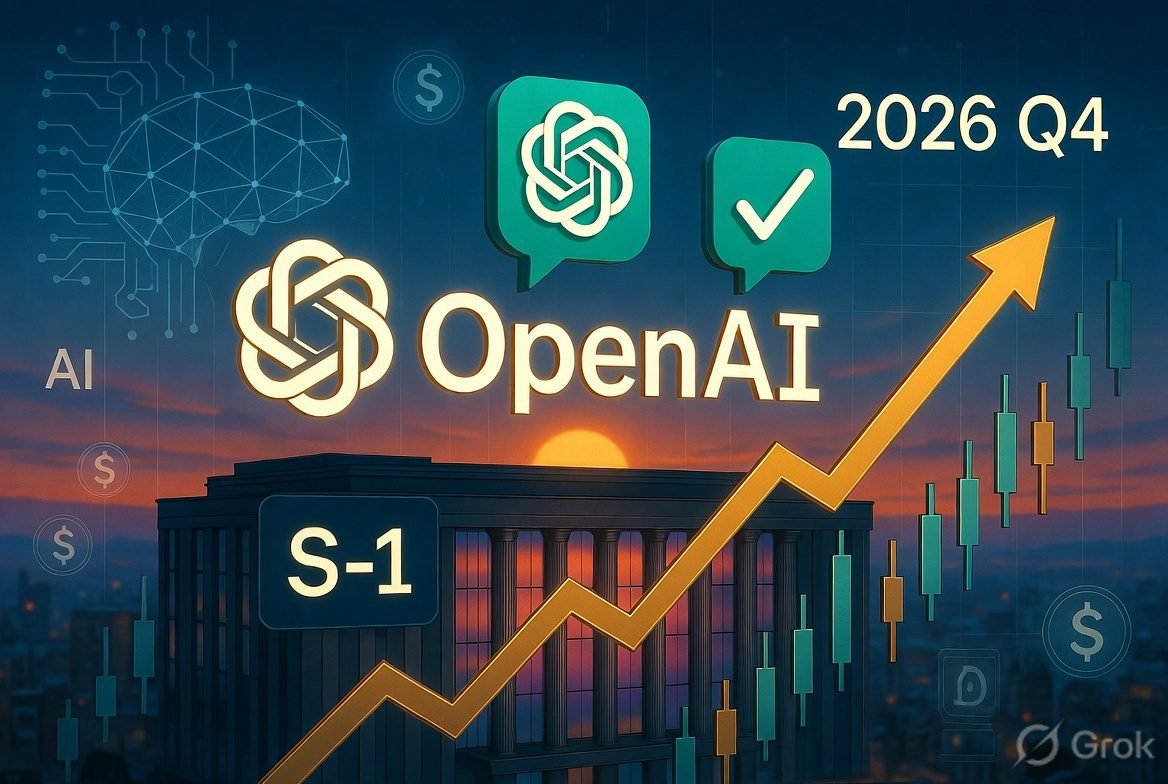
OpenAI IPO preparations moved from rumour to confirmed reality on June 8, 2026, when the company publicly confirmed it had submitted a confidential draft registration statement — a confidential S-1 — to the US Securities and Exchange Commission. The actual filing date was May 22, 2026, two days after a California jury dismissed Elon Musk's lawsuit against OpenAI on statute-of-limitations grounds, clearing the single most visible legal obstacle to the listing.
What "confidential filing" means in practice: the document exists, it has been reviewed by the SEC, but its full contents are not yet public. OpenAI has not disclosed a ticker symbol, a listing exchange, a share count, a price range, or a firm IPO date. What has been reported — from CNBC, Reuters, and The Wall Street Journal — is that Goldman Sachs, Morgan Stanley, and JPMorgan are leading the offering, and the internal target is a public debut as early as Q4 2026 at a valuation of $1 trillion or more.
However, Reuters reported in late June 2026 that OpenAI is now considering waiting until 2027, as advisers warned that current markets may not support the price OpenAI wants. The company itself said in an official statement it has "not committed to a timeline" because "there are things we want to do that are likely easier as a private company." The filing, they added, "gives us the option to go public sooner if that ends up being best." That wording is deliberate — it is an option, not a commitment.
| Item | Status | Source / Note |
|---|---|---|
| Confidential S-1 filed with SEC | ✅ Confirmed | May 22, 2026 — publicly confirmed June 8 |
| Underwriters | ✅ Confirmed | Goldman Sachs, Morgan Stanley, JPMorgan — per CNBC |
| Target listing window | ⏳ Reported | Q4 2026 — may slip to 2027 (Reuters, June 2026) |
| Target valuation | ⏳ Reported | $1 trillion+ — not officially disclosed |
| Ticker / Exchange | ❌ Not disclosed | Expected Nasdaq, no official confirmation |
| IPO size ($ raised) | ❌ Not disclosed | No official figure; SpaceX comparison: $75B |
| Public S-1 on SEC EDGAR | ❌ Not yet | Must appear 15+ days before any roadshow |
Section 02OpenAI IPO Financials: Revenue, Costs, and the Loss Problem
The revenue growth at OpenAI is genuinely extraordinary. The company went from $2 billion in annualised revenue at end-2023 to roughly $25 billion by February 2026 — a 12.5x increase in a little over two years. For context, Google took over a decade to reach comparable annual revenue. ChatGPT has crossed 900 million weekly active users, 50 million paying subscribers, and enterprise clients now represent more than 40% of revenue.
But the cost side of this business is where the story gets complicated — and where most headlines about the OpenAI IPO stay quiet.
| Year | Annualised Revenue | Projected Loss | Operating Margin | Free Cash Flow |
|---|---|---|---|---|
| End-2023 | ~$2B | — | — | Negative |
| End-2024 | ~$6B | — | — | Negative |
| End-2025 | ~$20B | — | — | Negative |
| 2026 (projected) | ~$25–30B | $14B (non-GAAP) / $25-26B (GAAP est.) | −122% (Q1 2026) | −$27B cash burn |
| 2029 (target) | — | Breakeven expected | Improving | First positive FCF |
| 2030 (target) | ~$280B (projected) | Profitable | — | Positive |
That Q1 2026 operating margin of −122% is the number that stops people mid-sentence. It means for every dollar of revenue OpenAI generated in that quarter, it spent $1.22 in operating costs — before large non-cash items like equity compensation.
That translated to roughly $6.95 billion burned in a single quarter. The primary driver is inference costs — the GPU compute required to generate every ChatGPT response. OpenAI has committed to over $1.4 trillion in data-centre and infrastructure spending over the coming years.
Section 03OpenAI IPO Valuation: How $1 Trillion Is Justified — and Challenged
OpenAI's last confirmed private-market valuation was $852 billion, set in its March 2026 funding round that raised $122 billion. That round included $50 billion from Amazon, $30 billion from Nvidia, and $30 billion from SoftBank. For context, this put OpenAI roughly at the size of Berkshire Hathaway's market capitalisation at the time — except Berkshire has been profitable for decades and OpenAI has never turned a profit.
| Company | IPO Valuation | Revenue at IPO | Profitable at IPO? | P/S Multiple at IPO |
|---|---|---|---|---|
| OpenAI (target) | $1 trillion | ~$25B annualised | No ($14B loss) | ~40x |
| Alibaba (2014) | $231B | ~$9B | Yes | ~26x |
| Facebook (2012) | $104B | ~$5B | Yes | ~21x |
| SpaceX (Jun 2026) | $1.77 trillion | ~$30B | Yes | ~59x |
| Anthropic (filed Jun 2026) | ~$965B | ~$30B annualised | Not disclosed | ~32x |
The bull case for a $1 trillion OpenAI valuation rests on the 2030 projection: OpenAI has told investors it expects to reach $280 billion in annual revenue by 2030, split roughly evenly between consumer and enterprise products. If that projection is accurate, and if the company achieves even modest profitability by then, a $1 trillion valuation today could look reasonable in retrospect — the way Amazon's losses in the 1990s looked trivial once AWS arrived.
The bear case is straightforward: to justify an $852 billion valuation, a company would need to generate $95 billion to $105 billion in free cash flow by 2030. Based on Q1 numbers, OpenAI isn't close. And GAAP losses — the audited, fully-disclosed numbers public investors will see — are estimated at $25–26 billion for 2026, roughly 80% higher than the $14 billion non-GAAP figure most headlines cite.
Section 04The OpenAI IPO Governance Structure That Worries Investors
This is the part of the OpenAI IPO story that receives the least attention and may matter the most. OpenAI completed a major corporate restructuring in October 2025, converting from a capped-profit nonprofit structure into OpenAI Group PBC — a public benefit corporation. The OpenAI Foundation (the former nonprofit) holds a 26% equity stake in the commercial entity. Microsoft holds roughly 27%.
| Shareholder | Approx. Stake | Investment | Strategic Role |
|---|---|---|---|
| OpenAI Foundation (nonprofit) | ~26% | Founding entity | Mission oversight, board influence |
| Microsoft | ~27% | Multi-billion $ | Azure cloud partner, Azure OpenAI API |
| Amazon | Stake from $50B round | $50B (2026 round) | AWS distribution partner |
| Nvidia | Stake from funding | $30B (2026 round) | GPU supply chain partner |
| SoftBank | Stake from funding | $30B (2026 round) | Stargate co-investor |
| Sam Altman (CEO) | No direct equity | — | ~7% options/incentives expected |
That last line is the unusual one. Sam Altman, the CEO who has led OpenAI through its most consequential years, currently holds no direct equity. A portion of any IPO proceeds is expected to go toward equity incentives for Altman and other executives.
But the structure is unprecedented for a company of this size going public. Institutional investors typically want a founder-CEO with significant skin in the game. The OpenAI governance model creates uncertainty that public market investors may demand a valuation discount for.
Section 05Before the OpenAI IPO: Anthropic, Google, and the Competition Problem
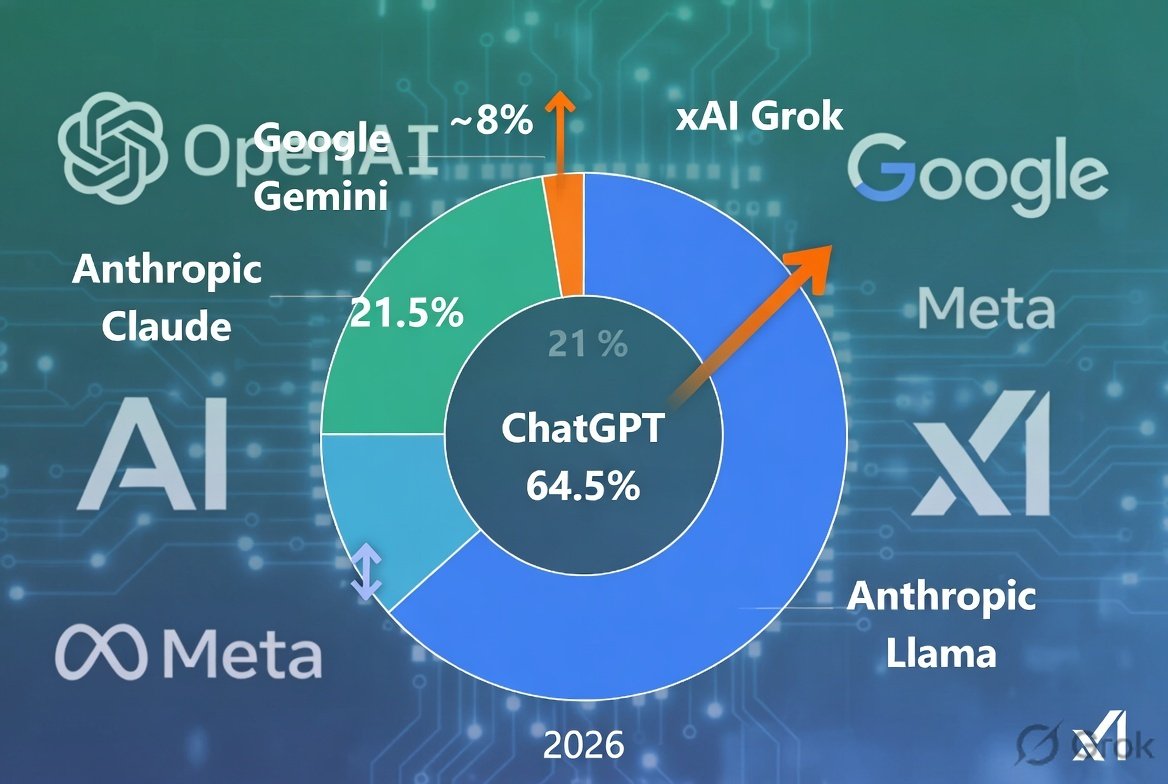
The AI landscape in mid-2026 — the backdrop against which this OpenAI IPO will be judged — looks very different from the one in which OpenAI built its dominant position. ChatGPT's share of AI chatbot web traffic, according to Similarweb data, has fallen from 86.7% to 64.5% over the past 12 months — while Google's Gemini has grown from 5.7% to 21.5% over the same period. That's not collapse, but it's real market share erosion, and it's happening fast.
| Company / Product | Backing | Web Traffic Share (est.) | YoY Change | Key Advantage |
|---|---|---|---|---|
| OpenAI / ChatGPT | Microsoft, independent | 64.5% | −22.2 pts | Brand recognition, 900M users |
| Google / Gemini | Alphabet (profitable) | 21.5% | +15.8 pts | Profitable parent, Search integration |
| Anthropic / Claude | Amazon, Google | ~8% | Growing | Enterprise safety positioning |
| Meta / Llama | Meta (profitable) | Growing | Growing | Open-source, free to developers |
| xAI / Grok | Elon Musk | Small but growing | Growing | X platform integration |
The structural risk here is significant: unlike OpenAI, Google is profitable. It can subsidise Gemini indefinitely. Meta's Llama models are open-source and free, which creates a floor on how much enterprises will pay for AI APIs when free alternatives exist.
OpenAI recently missed multiple internal revenue and user targets after facing ferocious competition from Google and Anthropic. For a company asking for a $1 trillion valuation, consistent execution matters enormously — and the internal misses are a warning sign worth watching.
Our broader coverage of the global AI race in context: the SK Hynix Nasdaq debut showed how AI-adjacent companies can attract massive investor appetite, and our bank earnings coverage has repeatedly highlighted how the largest US financial institutions are all building AI exposure into their investment banking pipelines.
Section 06OpenAI IPO and Indian Investors: What You Need to Know
Can Indian investors buy OpenAI shares once the OpenAI IPO completes? Yes — once OpenAI lists on a US exchange (expected Nasdaq), Indian investors can buy shares directly through any SEBI-registered broker with a US stocks feature, under the Liberalised Remittance Scheme (LRS) which allows up to $250,000 per year in overseas investment. The same route is used to buy Apple, Tesla, or any US-listed stock today.
But the more important question is whether you should — and the honest answer is: the risk profile of this particular listing is unlike most tech IPOs Indian retail investors have encountered.
| Factor | Detail | What It Means for You |
|---|---|---|
| LRS limit | $250,000/year | Buy through any broker with US stocks access |
| Currency risk | USD denominated | Rupee depreciation helps, appreciation hurts returns |
| Tax on gains (India) | Taxed as foreign equity | LTCG after 24 months at 12.5%; STCG at slab rate |
| Lock-up period | Typically 180 days | Insiders can't sell for 6 months; volatility at unlock |
| IPO allocation | Retail quota varies | High-demand IPOs often see minimal retail allocation |
| Pre-IPO access | Secondary market only | Platforms like Forge Global — illiquid, high minimum |
| Profitability timeline | 2029–2030 | 3–4 years of losses post-listing before breakeven |
The tax treatment for Indian investors buying US stocks is worth noting clearly: gains from US stocks sold after 24 months qualify as long-term capital gains at 12.5% (post Budget 2024 changes). Gains on holdings under 24 months are taxed at your income slab rate. Our ITR-4 investment disclosure calculator can help estimate the tax impact for your specific income bracket, and our tax-loss harvesting guide explains how losses from one US stock can offset gains from another in the same financial year.
For perspective on how Indian investors have approached major global tech IPOs before, our coverage of the SK Hynix Nasdaq IPO and the Circle bank charter story are useful comparisons for how US market listings affect Indian-market sentiment around technology stocks more broadly.
Section 07OpenAI IPO: Bull Case vs Bear Case
- Revenue growing 12.5x in 2 years — no comparable precedent
- 900M weekly users; deepest moat in consumer AI
- Enterprise is 40%+ of revenue and growing faster
- $280B revenue target by 2030 — if achievable, IPO price looks cheap
- GPU costs falling as Nvidia and competitors improve efficiency
- First-mover brand in AI — ChatGPT is a verb now
- Microsoft Azure partnership locked in through 2032
- Never been profitable; $14B loss in 2026 alone
- GAAP losses likely $25–26B — 80% worse than reported
- $207B estimated funding gap by 2030 (HSBC)
- Google can subsidise Gemini indefinitely from profits
- ChatGPT market share falling: 86.7% → 64.5% in 12 months
- CEO has no direct equity — unusual for this scale
- Governance structure (nonprofit foundation) creates investor uncertainty
- Missed multiple internal revenue and user targets in 2026
Our honest read on the OpenAI IPO: it is a genuine frontier investment — high ceiling, real risk of significant post-IPO decline if 2030 projections miss, and almost certain volatility in the first 6–12 months after listing. If you're investing with a 10-year horizon and treating it as a venture-style bet within a diversified portfolio, the risk is manageable. If you're investing because you use ChatGPT daily and feel like you're "missing out," that's a poor reason to buy into a pre-profitability company at a $1 trillion valuation.
For context on how to think about high-valuation tech companies in the broader portfolio context, our guides on behavioural mistakes in trading and why investors lose money are worth reading before any FOMO-driven investment decision. And if you're already holding India-listed IT stocks as your AI exposure play, our H-1B visa fee impact piece and TCS Q1 FY27 results cover how the Indian IT sector is navigating the same AI disruption from a very different cost-structure position.
Frequently Asked Questions
- IndMoney — Inside OpenAI's Confidential SEC IPO Filing: Valuation, Financials and Risks
- Yahoo Finance — OpenAI confidentially files for IPO with SEC
- SmartAsset — OpenAI Stock IPO: Valuation, Timeline and Investment Options
- TECHi — OpenAI IPO: Valuation, Timeline, Access Options, and Risks
- Forbes — OpenAI IPO: 4 Things To Know As Anticipation Builds
- CMC Markets — OpenAI IPO: What Investors Need to Know in 2026
- Vested Finance — OpenAI is Going Public: The $1T ChatGPT Debut
- Medium / Newsarticulated — OpenAI IPO 2026: Full Guide
- Yahoo Finance — 6 Things to Know Before You Buy the Stock
- SentiSight.ai — When Will OpenAI File for Its IPO? 2026 Update
- DecodetheFuture — OpenAI IPO Explained: S-1 Filing, Date & Valuation
- ValueAddVC — 2026 IPO Pipeline: Full List and Current Status
- US News & World Report — 7 Best Upcoming IPOs in 2026
- AI Funding Tracker — AI IPO Tracker 2026: SpaceX, OpenAI, Anthropic, Databricks
- Fidelity — Upcoming IPOs 2026
- SEC EDGAR — Where public S-1 will appear before roadshow
- Money.com — When Is OpenAI Going Public?

Pranab Barman is a Financial Educator and Personal Finance Researcher with over 10 years of hands-on experience in stock markets, trading, and investing. Currently enrolled in the CFA Program, he is committed to continuous learning and professional excellence in finance.
As the Founder of PlayWithStock, Pranab covers a wide range of topics including Mutual Funds, SIP, Taxation, Stock Market Basics, and Financial Calculators — with a focus on simplifying complex financial concepts for everyday all investors.
Email: support@playwithstock.com
Website: playwithstock.com
Related posts:
 Jio IPO 2026: 10 Crucial Facts Every Investor Must Know
 Reliance Jio IPO 2026: India’s Biggest-Ever Listing, Explained
 SBI Mutual Fund IPO Opens Tomorrow: Everything Before You Apply
 SBI Mutual Fund IPO 2026: Dates, Price Band, GMP & Should You Apply
 SK Hynix IPO: Massive $26.5B Debut Shocks Wall Street
 Vedanta Demerger 2026: What It Means for Shareholders
 Share Buyback Tender vs Sell Calculator: 2026 Tax Guide
 Mutual Fund BER vs TER Calculator (2026): Compare BER vs TER Online