

SBI Mutual Fund IPO Listing: What Actually Happened on Debut Day
SBI Funds Management shares debuted on the NSE and BSE on Tuesday, July 21, 2026, at 10 am. The stock opened at ₹613.30 on the NSE, a premium of 6.85% over the ₹574 issue price, and at ₹610 on the BSE, a slightly lower premium of 6.27%. Both exchanges saw the stock trade higher shortly after listing, touching ₹622.95 — up 1.57% from the listing price — before settling into a narrower trading range through the morning session.
| Metric | Value |
|---|---|
| Issue Price | ₹574 |
| NSE Listing Price | ₹613.30 (+6.85%) |
| BSE Listing Price | ₹610 (+6.27%) |
| Intraday High (post-listing) | ₹622.95 (+1.57% from listing) |
| Market Capitalisation | ₹1,26,884.18 crore |
| Retail Investor Profit (1 lot, 26 shares) | ₹1,021.80 on ₹14,924 invested |
| HNI Investor Profit (14 lots, 364 shares) | ₹14,305.20 on ₹2,08,936 invested |
A "Muted" Debut, Relative to Expectations
Multiple market reports have described the listing as muted — the actual listing-day premium of 6.85% on the NSE came in well below the grey market premium that had been quoted at roughly 18% just a day before listing. This is a common pattern with high-GMP IPOs: unofficial grey-market pricing often runs ahead of what the stock actually delivers once real exchange trading and price discovery take over, especially for a large, fully-OFS issue where profit-booking pressure from anchor and early allottees can weigh on the opening trade.
Even so, both retail and HNI allottees who received shares at the ₹574 issue price were sitting on a real listing-day gain — a retail investor with a single lot (26 shares, ₹14,924 invested) was up ₹1,021.80 at the listing price, while an HNI with the maximum 14 lots (364 shares, ₹2,08,936 invested) was up ₹14,305.20.
What This Means Going Forward
With the stock now trading freely on both exchanges, the earlier GMP-based estimates are no longer relevant — actual price discovery through NSE and BSE trading volumes will now determine where the stock settles in the coming sessions. Given the muted listing relative to grey-market expectations, short-term allottees who were purely chasing a listing pop had a narrower window than the GMP data suggested, while investors taking a longer-term view on India's largest AMC will now be watching how the stock trades over its first few full sessions before deciding whether to add to or trim their position.
FAQs — Updated
At what price did SBI Mutual Fund shares list?
SBI Funds Management shares listed at ₹613.30 on the NSE (a 6.85% premium over the ₹574 issue price) and at ₹610 on the BSE (a 6.27% premium), on July 21, 2026.
Was the SBI Mutual Fund IPO listing a good debut?
The listing has been widely described as "muted" — the actual listing premium of 6.85% came in well below the roughly 18% grey market premium that was being quoted the day before listing, though allottees at the issue price were still in profit.
What is SBI Funds Management's market capitalisation after listing?
At an intraday price of ₹622.95, SBI Funds Management's market capitalisation stood at approximately ₹1,26,884.18 crore.
SBI Mutual Fund IPO Opens Tomorrow: Everything Before You Apply
Subscription for India's largest AMC IPO opens July 14, 2026. Global sovereign funds are already in. Here's the complete, human breakdown of the numbers, the risks, and how to actually apply.
Tomorrow morning, millions of Indians who've never met a fund manager in their life will get the chance to own a small piece of the company that already manages a slice of their own money, whether they know it or not. The SBI Mutual Fund IPO opens for subscription on July 14, 2026, and it's shaping up to be one of the more genuinely interesting listings this year, not because of hype, but because the story underneath it is unusually layered.

The IPO, In Five Charts
Swipe / scroll →100% Offer for Sale
SBI is selling up to 12.83 crore shares, Amundi up to 7.54 crore — the company itself gets zero proceeds.
₹50 to ₹135 Range
GMP has swung from ₹50 to ₹135 in the days before listing — a genuinely volatile sentiment gauge.
ADIA and GIC Onboard
Abu Dhabi Investment Authority and Singapore's GIC are reported as anchor participants — a real credibility signal.
#1 Across Categories
Market leadership spans mutual funds, passive investing, and specialized funds — not just one category.
Priced Above HDFC AMC
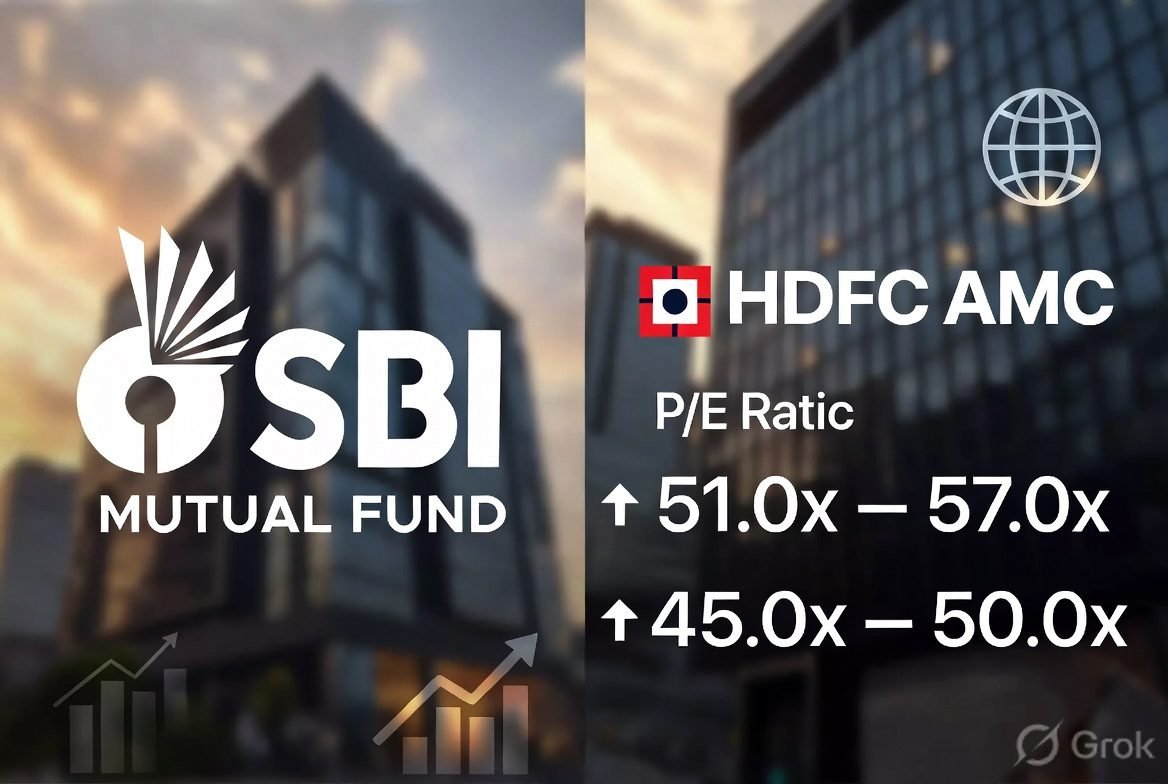
SBI MF's P/E sits above even HDFC AMC, long considered the benchmark for quality among listed AMCs.
1. The SBI Mutual Fund IPO: The Basics Before You Apply
The SBI Mutual Fund IPO opens for subscription on July 14, 2026, and closes July 16, 2026, with a price band set between ₹545 and ₹574 per share, according to ClearTax's complete IPO tracker. The lot size is 26 shares, meaning the minimum retail investment at the upper band is ₹14,924, with a maximum retail application of 13 lots, or 338 shares, costing ₹1,94,012.
Allotment is expected on July 17, with listing tentatively scheduled for July 21, 2026 on both the NSE and BSE. Anchor investor bidding happens July 13, the day before public subscription opens, and the UPI mandate confirmation cutoff for retail investors is 5:00 PM on July 16, so there's genuinely no room to procrastinate once the window opens tomorrow.
2. Who SBI Funds Management Really Is
It's worth pausing here, because "SBI Mutual Fund" is one of those names most Indians have heard a hundred times without ever really knowing what it is. SBI Funds Management Limited, incorporated in 1992, is the investment manager behind SBI Mutual Fund, and it's a joint venture between State Bank of India and Amundi, one of Europe's largest asset managers based in France. Thirty-four years of operating history sits behind a company most retail investors will only now get the chance to actually own a piece of.
The company manages roughly ₹16.32 lakh crore in assets, commanding about 15.4% to 15.5% of India's entire mutual fund industry, making it the country's largest asset manager by a meaningful margin, according to Sahi's detailed IPO profile. It serves approximately 18 million unique investors across 126 to 128 mutual fund schemes, supported by a distribution network of over 1,32,000 mutual fund distributors and 95 banking partners.
For context on just how large that footprint really is, it's worth comparing it against other major financial services listings this same season. Our coverage of silver's dramatic 2026 crash and its subsequent recovery shows how differently investor appetite behaves across commodity and equity markets in the same stretch of months, a useful reminder that scale alone doesn't insulate any asset from volatility, precious metal, mutual fund manager, or otherwise.
3. Why 100% OFS Matters More Than It Sounds
Here's a detail that genuinely changes how this IPO should be read, and one that's easy to skim past in the excitement of a big listing: this entire ₹11,692.91 crore issue is structured as an Offer for Sale, with zero fresh issue component. SBI Funds Management itself will not receive a single rupee of the money raised.
State Bank of India is selling down up to 12,83,34,397 shares of its roughly 62% stake, while Amundi India Holding is selling up to 7,53,74,842 shares of its approximately 36% stake, according to figures reported by Multibagg AI's market analysis. Every rupee from this IPO flows to those two existing shareholders, not into the business itself. This is a liquidity event for the owners, not a growth capital raise, and it fundamentally changes the question an investor should be asking before applying: not "will this fund good growth," but simply "is the asking price for an existing owner's stake fair."
4. The ADIA and GIC Angle
One detail that hasn't gotten as much attention as it probably deserves: reports indicate the Abu Dhabi Investment Authority and Singapore's sovereign wealth fund GIC are expected to participate as anchor investors in this IPO. When two of the world's most conservative, longest-horizon sovereign funds put capital into an Indian AMC listing, it's a genuine signal, not marketing language, since these institutions are famously unmoved by hype and famously thorough in their due diligence.
This matters for retail investors specifically because anchor investor participation, allocated the day before public subscription opens, often shapes broader market sentiment heading into the retail window. It's not a guarantee of listing performance, GMP has proven that repeatedly this week, but it is a meaningfully different signal than a purely domestic-institution-led anchor book would send.

5. SBI Shareholder and Employee Quotas: The Detail Most Investors Miss
Because State Bank of India is itself a selling shareholder, there's a dedicated reservation of 1,30,55,629 equity shares, roughly 6.4% of the total issue, exclusively for existing SBI shareholders who held at least one SBI share in their demat account as of the record date, according to IPO Central's allocation breakdown.
There's also a separate quota of 32,57,347 shares reserved specifically for SBI employees, a detail that doesn't get much coverage but matters enormously if you happen to work for the bank. If either applies to you, you effectively get two separate lanes to apply through, in addition to the standard retail quota, a genuine advantage worth checking before you submit a single, generic retail application and miss out on better odds elsewhere in the allocation.
6. The Financials, Honestly Explained
SBI Funds Management's numbers tell a genuinely strong, if slightly complicated, story. Profit after tax came in at ₹3,067.38 crore for the year ended March 31, 2026, up from ₹2,072.79 crore in FY24, a roughly 48% increase across the period, though FY26 alone showed a smaller sequential rise, according to IPO Central's financial breakdown.
| Metric | Value | Context |
|---|---|---|
| Issue Size | ₹11,692.91 crore | 100% Offer for Sale |
| Price Band | ₹545 - ₹574 | Per share |
| PAT (FY26) | ₹3,067.38 crore | Up from ₹2,072.79 crore (FY24) |
| AUM | ₹16.32 lakh crore | ~15.4% mutual fund market share |
| Unique Investors | ~18 million | Across 126-128 schemes |
One honest caveat worth flagging: analysts have noted that FY26 revenue and profit growth moderated compared to FY25, a normal pattern for a company operating at this scale, but worth knowing rather than assuming perpetual acceleration. A large, dominant business slowing its growth rate slightly as it matures is a very different story from a business in genuine trouble, and this is closer to the former.
What tends to get lost in headline profit figures is how genuinely capital-light this business is. Asset management doesn't require factories, inventory, or heavy fixed assets the way manufacturing or infrastructure businesses do. Revenue scales with assets under management and fee rates, meaning incremental AUM growth tends to flow disproportionately to the bottom line once the underlying operational infrastructure is already in place. This is part of why asset managers, when they execute well, can sustain margins that would be unusual almost anywhere else in financial services.
7. Beyond Mutual Funds: Where SBI Funds Management Actually Dominates
The mutual fund business, as large as it is, is genuinely just one part of the story. SBI Funds Management is India's largest passive fund manager too, holding somewhere between 27.9% and 29.6% market share in ETFs and index funds depending on the exact measurement date. It's also the largest Portfolio Management Services provider in the country, with close to 39% to 40% market share in PMS and advisory assets, and its Specialized Investment Fund platform commands a striking 61% market share.
The company also runs a genuine international footprint: it manages India-focused mandates for institutional investors in Japan, Australia, and Korea, with an AUM of ₹23,209.04 crore, alongside Amundi-sponsored India-focused UCITS funds carrying ₹8,681.65 crore, and advisory services covering ₹14,583.97 crore under Amundi's Global Emerging Markets fund umbrella. This is a business with genuine breadth, not a single-product company riding one strong category.
8. The GMP Rollercoaster: What the Grey Market Is Actually Saying
If you've been watching this IPO's Grey Market Premium over the past week, you've watched something genuinely volatile. GMP has ranged from as low as ₹50 to as high as ₹135 over the recorded observation period, according to IPOJi's day-wise GMP history, before settling into a range closer to ₹70 to ₹90 in the days immediately before subscription opens.
GMP is an informal, unregulated indicator, not exchange-published data, not a SEBI-sanctioned price signal, and definitely not a guarantee of listing performance. A swing this wide within a single week tells you sentiment is genuinely unsettled, not that the eventual listing price is predictable from this number alone.
At the current GMP range, the implied listing price would sit somewhere between ₹644 and ₹664, roughly 12% to 16% above the upper price band. Anchor investor participation from ADIA and GIC on July 13 could meaningfully move this number again before the retail window even fully opens, which is exactly why treating GMP as a fixed prediction rather than a live, shifting sentiment gauge is a mistake worth avoiding.
9. The Valuation Debate: Is SBI Mutual Fund IPO Worth the Price?
This is genuinely the most interesting question in the entire listing. At the upper price band, SBI Funds Management is valued at roughly 51x to 57x earnings, a premium even to HDFC AMC, which has long been considered the gold standard for quality among India's listed asset managers, trading around 45x to 50x earnings.
The bull case rests on genuine, hard-to-replicate advantages: unmatched scale, the deepest SIP franchise in the country at roughly 16% of all live SIP accounts nationally, and a distribution moat built on State Bank of India's branch network that virtually no competitor can match cost-effectively. The bear case is equally real: buyers in the unlisted, pre-IPO market reportedly paid a further premium above even this official range in preceding months, suggesting a meaningful amount of optimism was already priced in before retail investors ever got the chance to apply. Readers who followed our earlier SBI Mutual Fund IPO preview will recognize this tension; it hasn't resolved in the weeks since, it's simply gotten closer to being tested by the actual market.

10. How to Actually Apply
Retail investors can apply through their broker's ASBA facility or via UPI-based applications, a process that blocks funds in your bank account rather than debiting them upfront until allotment is finalized. Log into your broker's platform, navigate to the IPO section, select SBI Funds Management, enter your bid quantity within the 26-share lot structure, and confirm your UPI mandate before the 5:00 PM cutoff on July 16.
Allotment status becomes available on KFin Technologies' website on July 17, checkable using your PAN, application number, or DP/Client ID, with the same information also available through NSE, BSE, and most broker platforms directly. For anyone applying for the first time, understanding the basics of how a demat account and the broader IPO process work can make the difference between a smooth application and a last-minute scramble.
This isn't the only major listing this week
Alongside SBI Mutual Fund, our coverage of the Jio Platforms IPO and the broader Vedanta demerger gives useful context for how India's capital markets are handling several large, complex corporate actions simultaneously this season.
Real-World Example
Consider two investors evaluating this IPO the night before it opens. One applies purely because the GMP touched ₹135 at some point this week, treating that peak number as the expected outcome. The other reads the full picture, the 100% OFS structure meaning zero proceeds reach the company, the valuation premium over HDFC AMC, the genuinely volatile GMP range, and the sovereign fund participation as a quality signal rather than a price guarantee, before deciding how much to actually commit. Neither approach guarantees a specific outcome, since IPO listings carry real uncertainty regardless of preparation. But the second investor is making a decision grounded in the complete story rather than the single most exciting number they happened to see in a headline, a distinction worth internalizing well beyond this one listing. Readers building this kind of evaluation habit can start with our beginner investing guide, and our piece on why investors lose money covers many of the same behavioral patterns that show up around high-profile IPO listings specifically. Given how this IPO week overlaps with tax season, anyone booking gains or losses on this or any other investment should also keep an eye on the ITR filing deadline and, for crypto holders specifically, our recent coverage of India's crypto tax notice crackdown. More coverage is available in our Business category and Stock Market category, and readers managing IPO application funds within a broader budget may find our 50/30/20 budgeting framework useful for planning around applications like this one without disrupting other financial goals. For broader market context this week, our coverage of Nifty and Sensex movements and gold's 2026 rally round out the picture of where investor capital is flowing this quarter.

11. FAQs
When does the SBI Mutual Fund IPO open?
The SBI Mutual Fund IPO opens for subscription on July 14, 2026, and closes on July 16, 2026, with listing tentatively scheduled for July 21, 2026 on the NSE and BSE.
Will SBI Funds Management receive money from this IPO?
No. The IPO is structured entirely as an Offer for Sale, meaning all proceeds go to the selling shareholders, State Bank of India and Amundi India Holding, and the company itself receives no fresh capital.
What is the current GMP for SBI Mutual Fund IPO?
GMP has ranged between roughly ₹50 and ₹135 over the past week, settling closer to ₹70 to ₹90 as subscription opens, implying an unofficial listing estimate of 12% to 16% above the upper price band. This figure is unofficial and can change rapidly.
Do existing SBI shareholders get a special quota?
Yes. Investors holding at least one State Bank of India share as of the record date are eligible for a dedicated reservation of 1,30,55,629 shares, roughly 6.4% of the issue, in addition to the standard retail quota. A separate quota of 32,57,347 shares is reserved for SBI employees.
Is SBI Mutual Fund IPO overpriced compared to peers?
At its price band, the IPO is valued at roughly 51x to 57x earnings, a premium to listed peer HDFC AMC's 45x to 50x range. Whether that premium is justified depends on how much value investors place on SBI Mutual Fund's scale and distribution advantages. This is not investment advice; consult a SEBI-registered financial advisor before applying.
- Sahi — SBI Funds Management IPO complete profile
- ClearTax — IPO dates, GMP, and financials tracker
- IPO Central — Allocation, quotas, and financial breakdown
- IPOJi — Day-wise GMP history and application guide
- Multibagg AI — OFS structure and selling shareholder details
- KFin Technologies — Official IPO registrar and allotment status
- NSE India — HDFC AMC peer valuation data
- BSE India — Official exchange listing information
- SEBI — IPO regulatory framework
- AMFI — Indian mutual fund industry data
- Investopedia — Offer for Sale mechanics explained
- State Bank of India — Official selling shareholder disclosures
- Amundi — Joint venture partner official site
- Reuters — ADIA and GIC anchor investor reporting
- Reserve Bank of India — Broader financial sector regulatory context


Pranab Barman is a Financial Educator and Personal Finance Researcher with over 10 years of hands-on experience in stock markets, trading, and investing. Currently enrolled in the CFA Program, he is committed to continuous learning and professional excellence in finance.
As the Founder of PlayWithStock, Pranab covers a wide range of topics including Mutual Funds, SIP, Taxation, Stock Market Basics, and Financial Calculators — with a focus on simplifying complex financial concepts for everyday all investors.
Email: support@playwithstock.com
Website: playwithstock.com
Related posts:
 SBI Mutual Fund IPO Listing: 7 Essential Facts to Know Before July 21 Debut
 SBI Mutual Fund IPO 2026: Dates, Price Band, GMP & Should You Apply
 Zepto IPO 2026: Complete Guide — Date, Valuation, Financials, and Should You Apply?
 Mutual Fund BER vs TER Calculator (2026): Compare BER vs TER Online
 What Are Life Cycle Funds? SEBI’s Quiet New Mutual Fund Category
 Mutual Fund Guide India 2026: The Essential 7-Step Beginner Blueprint
 Fed Rate Hike 2026: Why the July 28-29 FOMC Meeting Could Change Everything
 Reliance Jio IPO 2026: India’s Biggest-Ever Listing, Explained