
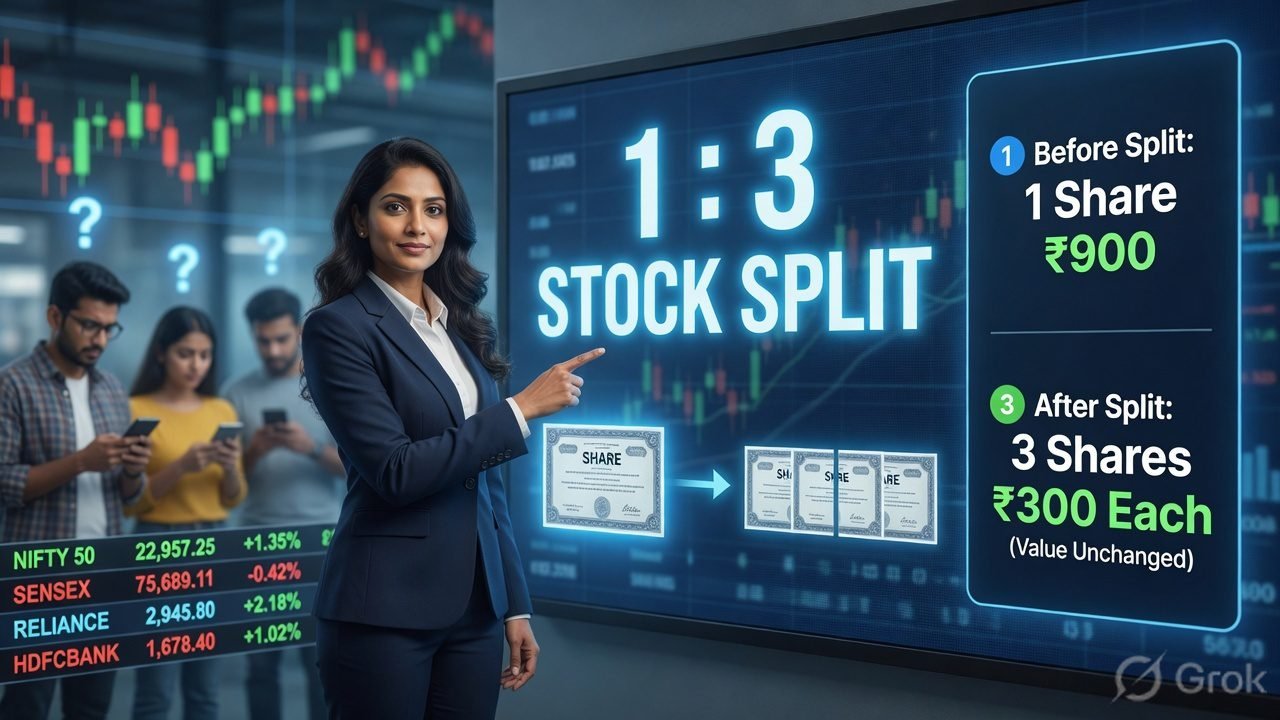

A share doesn’t get more valuable just because there are more of them — but the story behind why companies split their stock is more interesting than the mechanics alone.
Table of Contents
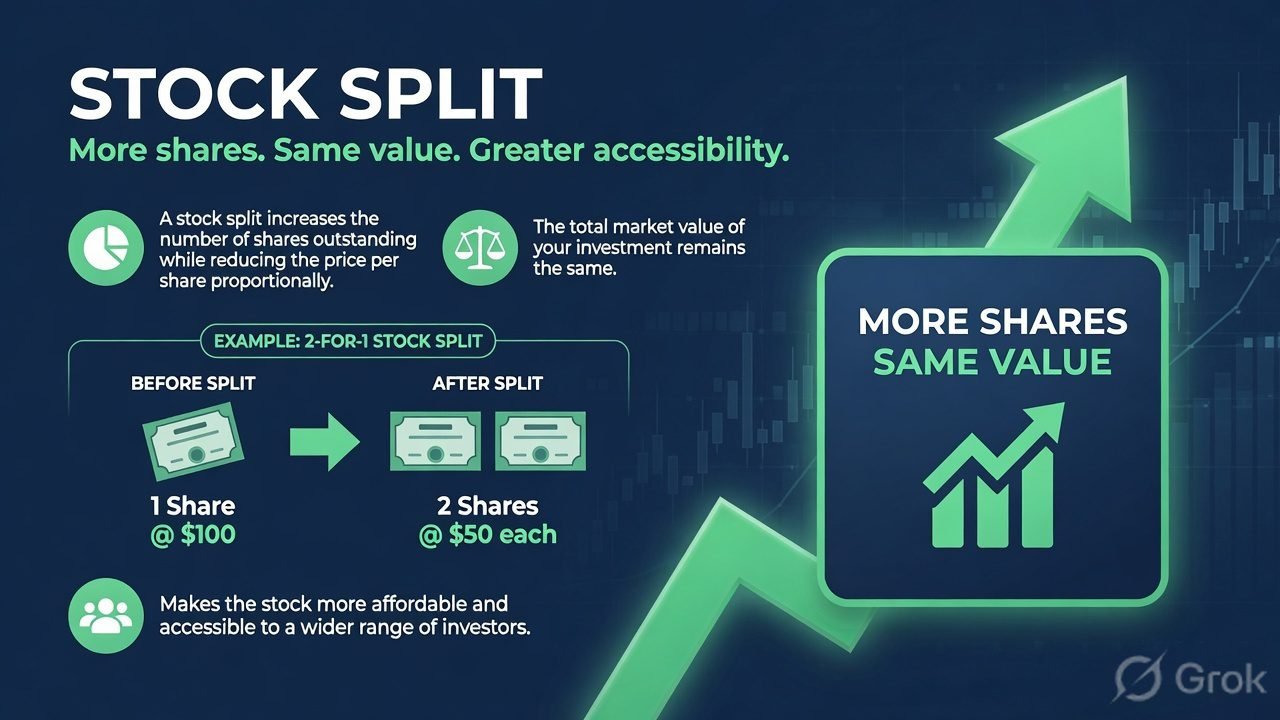
A Question That Confuses Almost Every New Investor
Someone opens their trading app one morning and finds they suddenly own fifty shares of a company instead of ten. Nothing was bought. Nothing was sold. And yet the number just changed overnight. For a lot of beginner investors, this is the exact moment stock splits stop being an abstract term from a textbook and start being something confusing that just happened to their own portfolio.
The Simplest Way to Think About It
Here’s the analogy that tends to make it click immediately. Imagine handing someone a ₹500 note and asking them to break it into five ₹100 notes. They now have more individual pieces of paper in their wallet — five instead of one — but the total amount of money hasn’t changed even slightly. A stock split works on exactly this principle, just applied to shares instead of currency. The company divides each existing share into a larger number of smaller shares, and the price per share drops in exact proportion, leaving the total value of anyone’s holding untouched.
How a Stock Split Actually Works
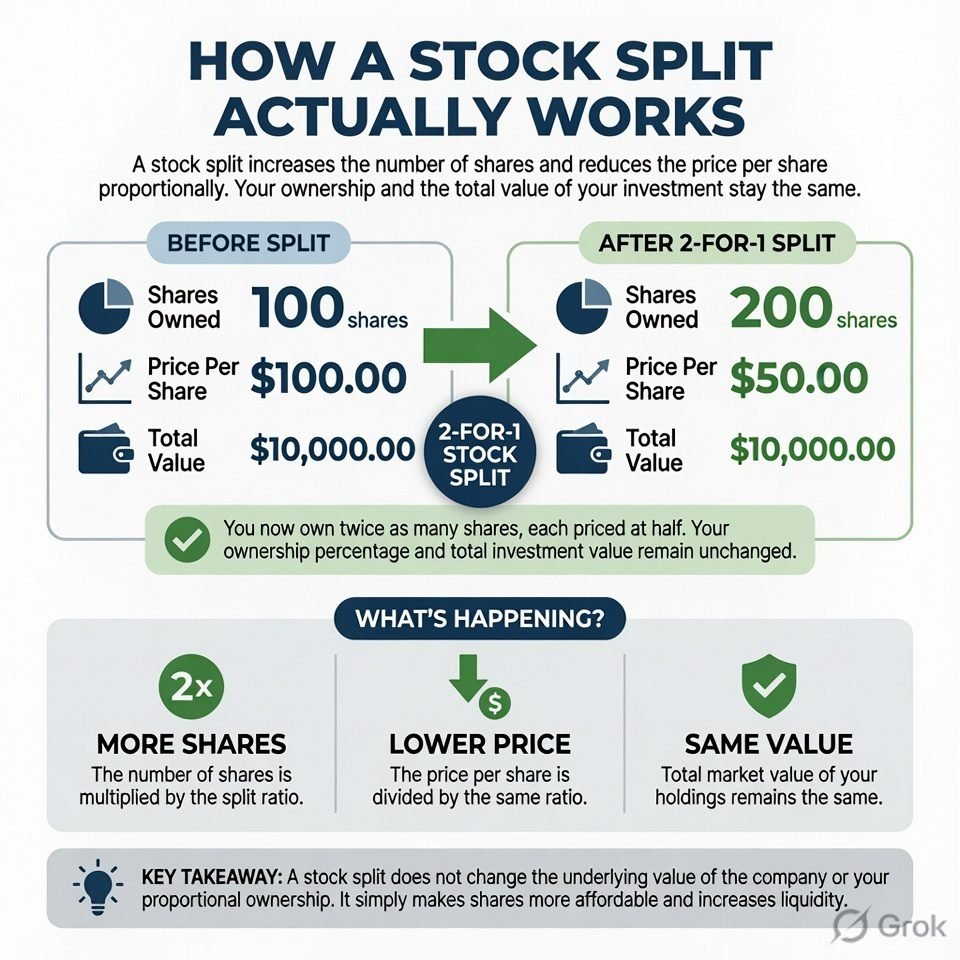
When a company’s board approves a split, it announces a split ratio — something like 1:5, 1:2, or 1:10 — which tells existing shareholders exactly how many new shares they’ll receive for each share they currently hold.
Consider someone holding 10 shares of a company priced at ₹3,000 each, giving them a total holding worth ₹30,000. If the company announces a 1:5 split, that same investor wakes up owning 50 shares, each now priced at ₹600. The total value of the holding is still ₹30,000. Nothing was created, and nothing was lost — the pie was simply cut into smaller slices.
The Three Dates That Actually Matter
https://www.nseindia.com/companies-listing/corporate-filings-actionsThree dates govern how a split plays out in practice. The announcement date is when the board first makes the split public. The record date is the cut-off the company uses to decide exactly who owns shares and therefore qualifies for the split. And the ex-date is when the stock begins trading at its new, adjusted price on the exchange. If an investor already owned the shares before the record date, the additional shares simply appear in their demat account — no application, no request, no action required.
Why Companies Choose to Split Their Shares
A stock split adds no real value to a company. The business doesn’t earn more revenue, doesn’t gain new customers, and doesn’t become more profitable the moment a split takes effect. So why do boards bother doing it at all?
What Is a Q1 Preview and Why Does It Matter?
- The most common reason is affordability. When a share price climbs into the tens of thousands of rupees, it becomes genuinely difficult for a smaller retail investor to buy even a single share without that one position dominating their entire portfolio. A split brings the price back down to an accessible range without touching the underlying value of the business at all — it simply removes a psychological and practical barrier to entry.

Liquidity Rewards Companies With Lower Prices
A related but distinct reason is liquidity. Shares priced very high tend to trade in smaller volumes, purely because fewer people can afford to buy and sell them freely. Once a split brings the price down, more shares are available to change hands at that lower price point, which typically increases daily trading volume and narrows the gap between buy and sell prices — a healthier, more efficiently priced stock overall.
There’s also a behavioral dimension worth noting. Companies overwhelmingly split their stock after a long stretch of strong price appreciation, not during periods of weakness. While a split guarantees nothing about future performance, the market often reads it as a subtle vote of confidence from management — a company doing poorly rarely has a share price high enough to need dividing in the first place.
Forward Splits vs Reverse Splits
Everything described so far is a forward split — more shares at a lower price. The mirror image also exists.
A reverse split consolidates multiple existing shares into one, raising the price per share while shrinking the total share count. In a 5:1 reverse split, for instance, five shares become one, and the price multiplies by five to compensate. Companies typically reach for this tool defensively — to meet an exchange’s minimum share price requirement, or to make a beaten-down stock look more palatable to institutional investors who often avoid anything trading below a certain threshold. Reverse splits are considerably rarer on Indian exchanges than the forward kind, and when they do appear, they’re usually a signal worth paying closer attention to.
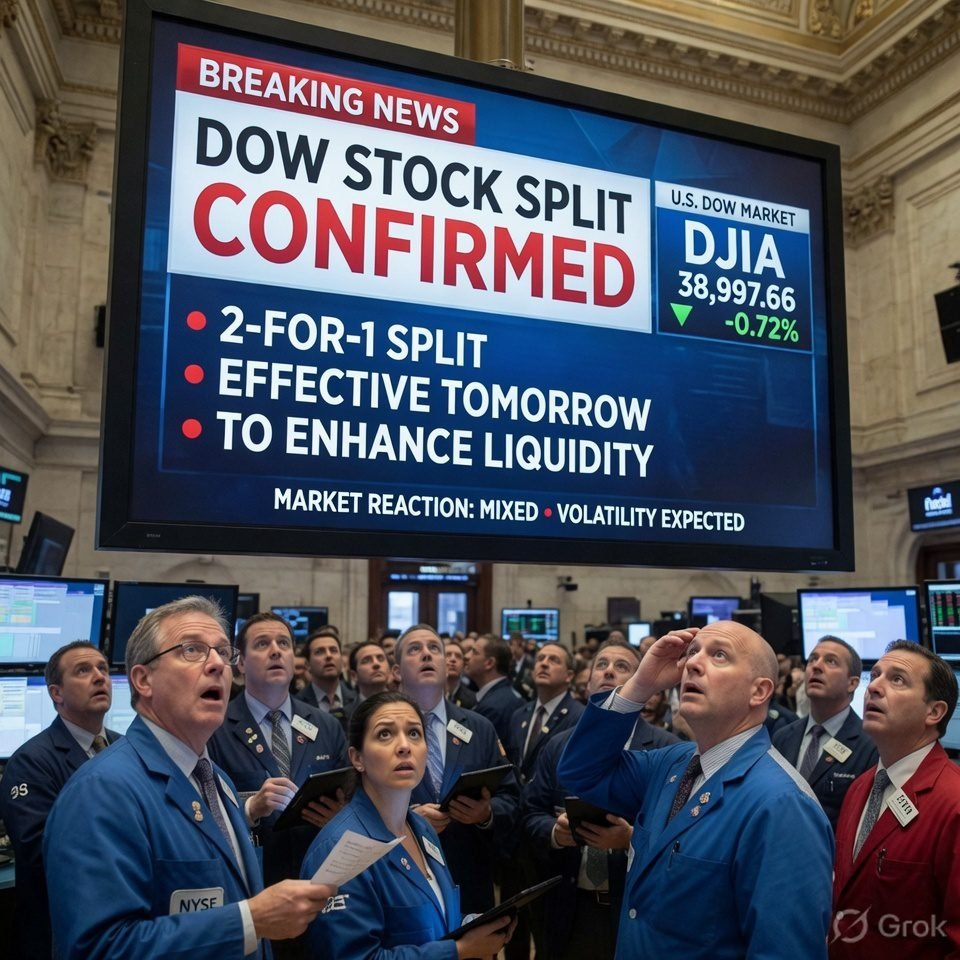
Indian exchanges typically see somewhere between twenty and fifty companies announce stock splits in a given year, depending on how the broader market has performed. A handful of large, well-known names — Infosys, Oil India, Larsen & Toubro, Indian Oil Corporation, and HCL Technologies among them — have split their shares multiple times across their listed history as their prices climbed over the years.
On the other side of the ledger sit companies that have deliberately never split, no matter how high their share price has climbed. MRF, Bosch, and Page Industries are the names most often cited as examples — each trading at a price high enough to be genuinely inaccessible to a retail investor buying a single share, purely by management’s own choice.
A Live Example From This Year
More recently, a wave of smaller and mid-sized companies — including names like Deepak Builders & Engineers India and E2E Networks — announced splits in the middle of 2026 as their share prices rose sharply enough to make a split worth considering. Meanwhile, some much larger names, including Siemens, Maruti Suzuki, and Mahindra & Mahindra, have drawn market speculation about a potential future split given how far their prices have climbed relative to their face value — though speculation is exactly that, and nothing is confirmed until a board formally announces it.
Does a Split Change What You Actually Own?
This is the single most important idea in this entire article, and it’s worth stating plainly: no. An investor’s total holding value and their percentage ownership of the company remain identical immediately before and after a split. They simply end up holding a larger number of shares, each worth proportionally less.
The company’s market capitalisation — share price multiplied by total shares outstanding — also stays exactly where it was, because both numbers move in perfectly offsetting directions. Nothing about the size of the business has changed; only the number of pieces it’s been divided into.
Here’s where things get genuinely interesting from a behavioral standpoint, and where a lot of otherwise sensible investors trip up.
Why a Lower Price Feels Like a Bargain — Even When It Isn't
The moment a stock splits, its per-share price drops sharply — a ₹3,000 stock might suddenly show up on a screen at ₹600. Psychologically, this can trigger the same instinct that makes a discounted price tag feel like a deal, even though absolutely nothing about the company’s actual valuation has changed. A stock’s price-to-earnings ratio, its debt levels, its growth rate — none of these are affected by a split in the slightest. A stock that was expensive before a split is exactly as expensive afterward; it simply looks cheaper on the surface to an eye that isn’t looking closely.
Volatility Sometimes Follows
There’s a second, related effect. A lower headline price can attract a wave of new retail buying activity purely because the stock now “feels” more accessible, and that fresh wave of trading can occasionally increase short-term price volatility in the weeks following a split — activity that has more to do with psychology than with any change in the underlying business.
Five Things Worth Remembering
- A split changes the packaging, not the contents. Your total investment value is identical immediately before and after — treat the event as neutral, not as a windfall.
- Never confuse a lower price with a better valuation. Always check the price-to-earnings ratio and fundamentals rather than reacting to the headline price drop.
- A split is not a taxable event. Your original purchase date and cost of acquisition simply carry forward, proportionally divided across your new share count.
- Watch for the record date, not the announcement date. You only need to hold shares before the record date to qualify — buying after an announcement but before the record date still works.
- Companies that never split aren’t doing anything wrong. A high, unsplit share price is simply a management choice, not a red flag or a missed opportunity.
Frequently Asked Questions
Does a stock split make my investment worth more?
No. Your total investment value stays exactly the same immediately after a split. You simply hold a larger number of shares, each priced proportionally lower.
Do I need to do anything to receive my split shares?
No action is required. If you hold the shares before the record date announced by the company, the additional shares are automatically credited to your demat account.
Is it a good idea to buy a stock right before it splits?
Not on the basis of the split alone. A split doesn’t change a company’s fundamentals or growth prospects — the buying decision should rest on the business itself, not on an upcoming change in share count.
How is a stock split different from a bonus share issue?
The two look similar on the surface but work differently under the hood. A split divides the face value of existing shares, while a bonus issue allots entirely new shares out of the company’s reserves, keeping the face value unchanged. Both increase your share count without requiring fresh investment, but the accounting behind them differs.
Why do some large companies never split their stock?
It’s purely a management decision. Companies like MRF and Bosch in India, or Berkshire Hathaway globally, have chosen to let their share price climb indefinitely rather than dividing it — a preference, not a flaw.
Disclaimer
This article is for educational and informational purposes only and does not constitute investment advice. Company examples and 2026 market references are based on publicly available information and general market commentary at the time of writing, and should not be treated as a recommendation to buy, sell, or hold any specific security. Please consult a SEBI-registered financial advisor before making investment decisions based on your personal circumstances and risk tolerance.
— Pranab, Play With Stock

Pranab Barman is a Financial Educator and Personal Finance Researcher with over 10 years of hands-on experience in stock markets, trading, and investing. Currently enrolled in the CFA Program, he is committed to continuous learning and professional excellence in finance.
As the Founder of PlayWithStock, Pranab covers a wide range of topics including Mutual Funds, SIP, Taxation, Stock Market Basics, and Financial Calculators — with a focus on simplifying complex financial concepts for everyday all investors.
Email: support@playwithstock.com
Website: playwithstock.com
Related posts:
 Why Is the Stock Market Falling Today? US-Iran Tensions, Crude Oil Spike & FII Selling Explained
 Common Behavioral Mistakes in Stock Trading
 Why Investors Lose Money: 7 Costly Mistakes to Avoid
 What Is Circuit Breaker Stock Market: Meaning, Limits & 2026 Update
 Jio Financial Services Q1 FY27 Results Preview: Date, Estimates & Stock Analysis
 What is the Dollar Index (DXY) and Why It Matters for India
 Monsoon 2026 India Inflation: Why a Dry June Hits Grocery Bills
 Fed Rate Hike 2026: Why the July 28-29 FOMC Meeting Could Change Everything