

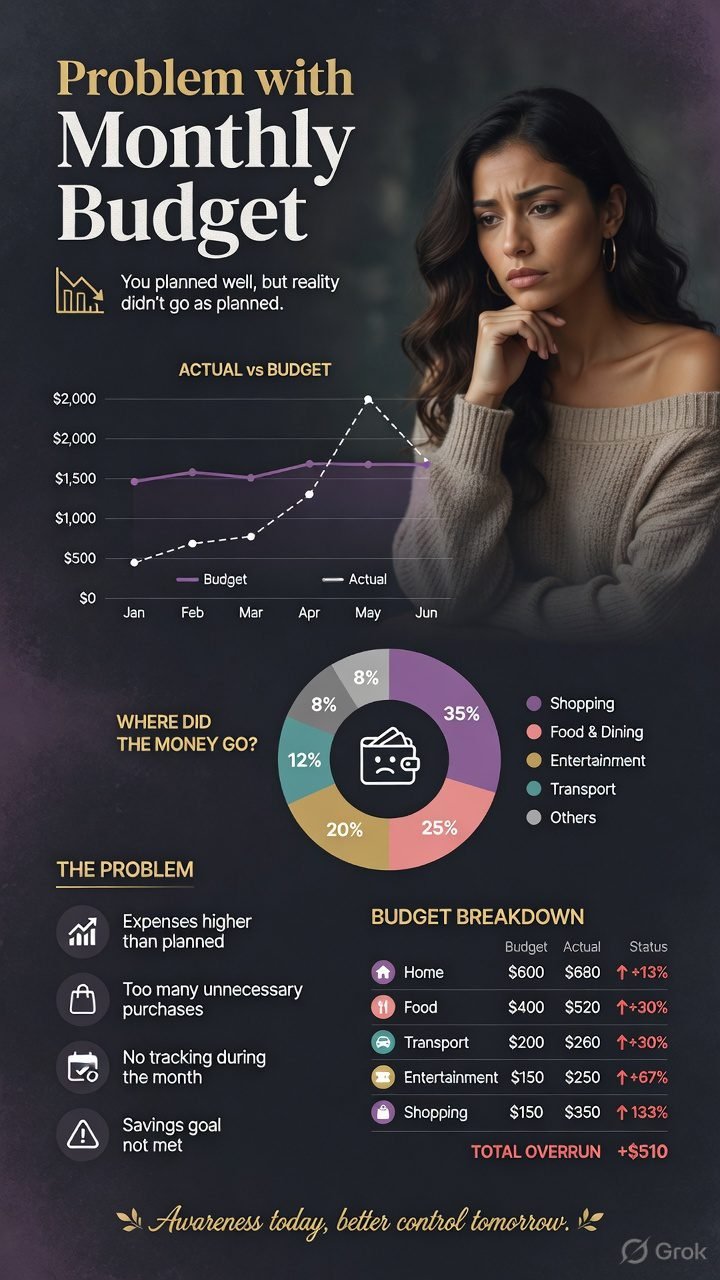






Every year the same festival arrives on the same date. Every year it somehow still catches our budget by surprise.
Table of Contents
- The ₹4.5 Lakh Crore Surprise
- Why “I’ll Just Budget for It” Doesn’t Work
- What a Sinking Fund Actually Is
- A Real Example: Building a Diwali Sinking Fund
- Where to Actually Keep This Money
- One Fund or Many? Handling Multiple Festivals
- Sinking Fund vs Emergency Fund: Don’t Mix Them Up
- Practical Takeaways
- Frequently Asked Questions
- Disclaimer
A Predictable Event That Somehow Still Surprises Us
India’s festival economy is enormous — annual spending across Diwali, Eid, Durga Puja, Christmas, and the dozens of regional celebrations that punctuate the calendar adds up to more than ₹4.5 lakh crore every year, spanning clothing, electronics, gold, travel, and gifting. During Diwali alone, household consumer spending typically spikes 30 to 40 percent above a normal month.
Here’s what makes this genuinely strange: none of these dates move. Diwali doesn’t sneak up on the calendar. Eid doesn’t arrive without warning. Every festival that drains a household’s finances each year was fully knowable, months in advance — and yet for most families, the spending still gets funded the same way emergencies get funded: out of whatever happens to be sitting in the account that month, often topped up with credit card debt or a quick personal loan.
The Problem With Monthly Budgeting Alone
A regular monthly budget is built to handle regular monthly expenses — rent, groceries, utilities, EMIs. It isn’t built to absorb a single month where spending jumps 30 to 40 percent above normal, all at once, on things that don’t recur the other eleven months of the year. When festival season arrives, that spike has nowhere to come from except savings that were meant for something else, or debt.
This is exactly the gap a sinking fund is designed to close — not by budgeting harder in the festival month, but by removing the need to fund it from that single month at all.
What a Sinking Fund Actually Is
A sinking fund is money set aside gradually, in small regular amounts, specifically for a known future expense — as opposed to an emergency fund, which exists for the unknown. A festival sinking fund works on exactly this principle: instead of finding ₹25,000 in October, you set aside roughly ₹2,000 a month starting in January, so that by the time Diwali arrives, the money is already sitting there, already yours, already spent from your perspective months ago.
The psychological effect here is larger than the mechanical one. Money that’s been accumulating for ten months doesn’t feel like a sacrifice when you spend it — it feels like a plan that worked. Money you’re scrambling to find in October, on the other hand, almost always feels like a crisis, which is exactly the emotional state that pushes people toward high-interest credit card debt or a hastily taken personal loan.
A Real Example: Building a Diwali Sinking Fund
Let’s make this concrete with actual numbers, the way it would work for an average household.
Suppose a family typically spends around ₹24,000 on Diwali — covering sweets, new clothes, home decoration, gifts for family, and a Dhanteras purchase. Instead of finding that ₹24,000 in a single month, they open a dedicated recurring deposit or a separate savings sub-account in January and set aside ₹2,000 every month.
| Month | Monthly Contribution | Running Total |
|---|---|---|
| January | ₹2,000 | ₹2,000 |
| April | ₹2,000 | ₹8,000 |
| July | ₹2,000 | ₹14,000 |
| October (Diwali month) | ₹2,000 | ₹24,000 |
By the time Diwali arrives, the full ₹24,000 is sitting ready, untouched by the rest of the year’s budget, with zero interest paid to anyone and zero last-minute stress about where the money will come from.
What This Actually Prevents
Compare this to the more common alternative: a family that doesn’t plan ahead and instead puts ₹24,000 of Diwali spending on a credit card, planning to pay it off “over the next few months.” At a typical credit card interest rate of 30-40% annually, carrying even half that balance for four months can add ₹1,500-2,500 in pure interest cost — money that bought absolutely nothing except delay.
Where to Actually Keep This Money
Keep It Separate, Even If It's Small
The single most important practical rule is separation. A festival sinking fund mixed into your regular savings account tends to quietly get spent on other things throughout the year, defeating the entire purpose. A few practical options:
- A separate savings sub-account — many banks now offer free “goal” or “bucket” sub-accounts within a single savings account, specifically for this kind of purpose
- A recurring deposit (RD) — locks in a fixed monthly contribution automatically and earns a bit of interest along the way, with the added benefit that it’s mildly inconvenient to withdraw early, which discourages dipping into it
- A separate UPI-linked savings account at a different bank — creates enough friction that the money genuinely feels “gone” from everyday spending, without being completely inaccessible in a real emergency
Automate It So It Never Depends on Willpower
Whichever option is chosen, setting up an automatic transfer on salary day — before any discretionary spending happens — removes the risk of “forgetting” to contribute in a busy month. The fund should build itself quietly in the background, the same way an SIP does.
One Fund or Many? Handling Multiple Festivals
India’s festival calendar isn’t a single annual event — depending on the household, it might include Diwali, Holi, Eid, Durga Puja, Christmas, or a specific regional celebration, sometimes several of these in the same family. Two approaches work well here:
- One combined “Festivals & Celebrations” fund, sized to cover the total of everything across the year, with monthly contributions calculated backward from that annual total
- Separate small funds per festival, useful for families where one festival (say, Diwali) is dramatically larger in spend than the others, and tracking them separately gives a clearer picture
Either approach works — the only real mistake is having no dedicated fund at all and treating every festival as an unplanned expense.
Sinking Fund vs Emergency Fund: Don't Mix Them Up
This is one of the most common points of confusion for beginners, so it’s worth stating plainly. An emergency fund exists for the unknown and unpredictable — a job loss, a medical bill, a sudden car repair. A sinking fund exists for the known and entirely predictable — Diwali will happen on roughly the same date every year, and so will the spending around it.
Using emergency fund money to cover a festival, even temporarily with the intention of “paying it back,” is a common but risky habit — it leaves genuine emergencies underfunded at exactly the moment a totally foreseeable, plannable expense arrives.
Practical Takeaways
Five Steps to Start This Week
- Calculate last year’s actual festival spending using bank and card statements — most people significantly underestimate this number until they actually add it up
- Divide that total by the number of months until the festival to get your monthly contribution amount
- Open a genuinely separate account or RD — mixing it with regular savings defeats the purpose
- Automate the transfer on salary day so it never depends on remembering or willpower
- Start now, regardless of which festival is next — even four or five months of contributions meaningfully softens the impact compared to zero planning
Frequently Asked Questions
H3: How much should I actually save for festival expenses?
Start by reviewing last year’s actual spending across all festivals from bank and card statements — most households find the real number is 20-30% higher than what they assumed. Use that figure, divided by the months available, as your monthly target.
H3: Is a sinking fund the same as a budget?
No. A budget governs your regular monthly spending. A sinking fund is a dedicated pool of money, built gradually over many months, set aside specifically for one predictable future expense — the two work together rather than replacing each other.
H3: Should I invest this money in mutual funds instead of a savings account?
Generally no, if the festival is less than a year away. Money needed within 12 months shouldn’t be exposed to market volatility — a simple recurring deposit or high-yield savings sub-account is the more appropriate, lower-risk home for this kind of short-term, date-specific goal.
H3: What if I can’t afford ₹2,000 a month right now?
Start with whatever amount is realistic, even ₹300-500 a month. A partially funded festival budget that reduces reliance on credit cards is still a meaningful improvement over funding the entire expense through debt.
H3: Can I use this same method for weddings or other big one-time expenses?
Yes — the sinking fund principle applies to any predictable future expense with a known or roughly estimated date, including weddings, annual insurance premiums, or planned home repairs.
Disclaimer
This article is for educational and informational purposes only and does not constitute personalized financial advice. Figures used for festival spending are illustrative examples based on general household patterns and publicly reported industry data, and individual circumstances will vary. Please consult a qualified financial advisor for guidance specific to your situation.
— Pranab, Play With Stock

Pranab Barman is a Financial Educator and Personal Finance Researcher with over 10 years of hands-on experience in stock markets, trading, and investing. Currently enrolled in the CFA Program, he is committed to continuous learning and professional excellence in finance.
As the Founder of PlayWithStock, Pranab covers a wide range of topics including Mutual Funds, SIP, Taxation, Stock Market Basics, and Financial Calculators — with a focus on simplifying complex financial concepts for everyday all investors.
Email: support@playwithstock.com
Website: playwithstock.com
Related posts:

What Are Life Cycle Funds? SEBI’s Quiet New Mutual Fund Category

Mutual Fund Guide India 2026: The Essential 7-Step Beginner Blueprint

SBI Mutual Fund IPO 2026: Dates, Price Band, GMP & Should You Apply

SBI Mutual Fund IPO Opens Tomorrow: Everything Before You Apply

Mutual Fund BER vs TER Calculator (2026): Compare BER vs TER Online

The 20-30-40 Rule for Home Loan Affordability

What Happens to Your EPF When You Change Jobs

How to Invest in Gold ETF: The Complete Gold ETF vs Physical Gold Guide