

India US Trade Deal 2026: Inside the Tariff Rollercoaster Before July 22
Tariffs went from 50% to 18% in February, then reportedly climbed back toward 50% by summer. Now a July 22 deadline could reset everything again. Here's the complete, verified timeline.
The India US trade deal 2026 story is one of the wildest policy rollercoasters in recent memory: a 50% tariff, cut to 18% in a single February announcement, a market rally that added thousands of points to the Sensex in one session, then a slide back toward 50% by summer, and now a fresh deadline that could reset the entire relationship again. Here's the complete, verified timeline.
The Rollercoaster, In Five Charts
Swipe / scroll →Tariff Timeline 2026
Jan: 50% → Feb 2: cut to 18% → By July: back near 50% → July 22: new deadline.
Historic Market Rally
Nifty jumped 2.8% in a single session; Sensex surged 2,000-4,200 points on the tariff news.
What's At Stake
India exports $87 billion to the US annually — about 2.5% of India's entire GDP.
126% Duty Surprise
Feb 25: US imposed a 126% countervailing duty on Indian solar cells — a separate shock mid-deal.
India vs Neighbors
At 18%, India's tariff was briefly more competitive than Vietnam and Bangladesh's ~19-20%.
1. India US Trade Deal 2026: The Story So Far
The India US trade deal 2026 saga began with tariffs that had climbed to a punishing 50% on most Indian goods by early 2026, a combination of a 10% baseline duty, a 15% reciprocal tariff, and an additional 25% punitive duty tied to India's continued purchases of Russian oil, according to ClearTax's detailed tariff tracker.
That 50% rate hit over 55% of India's $87 billion in annual exports to the US, sparing only critical sectors like pharmaceuticals, semiconductors, energy, and critical minerals. It was, by any measure, one of the most severe trade overhangs facing Indian markets in years.
2. February's Historic Rally: When Tariffs Fell From 50% to 18%
On February 2, 2026, President Trump announced a trade deal that slashed the reciprocal tariff from 25% to 18% and fully removed the 25% punitive duty, bringing the effective rate on most Indian goods down to roughly 18%, according to IndMoney's market impact analysis. In exchange, India committed to moving toward zero tariffs on US goods, halting Russian oil purchases, adopting stronger "Buy American" policies, and purchasing over $500 billion in US goods over five years.
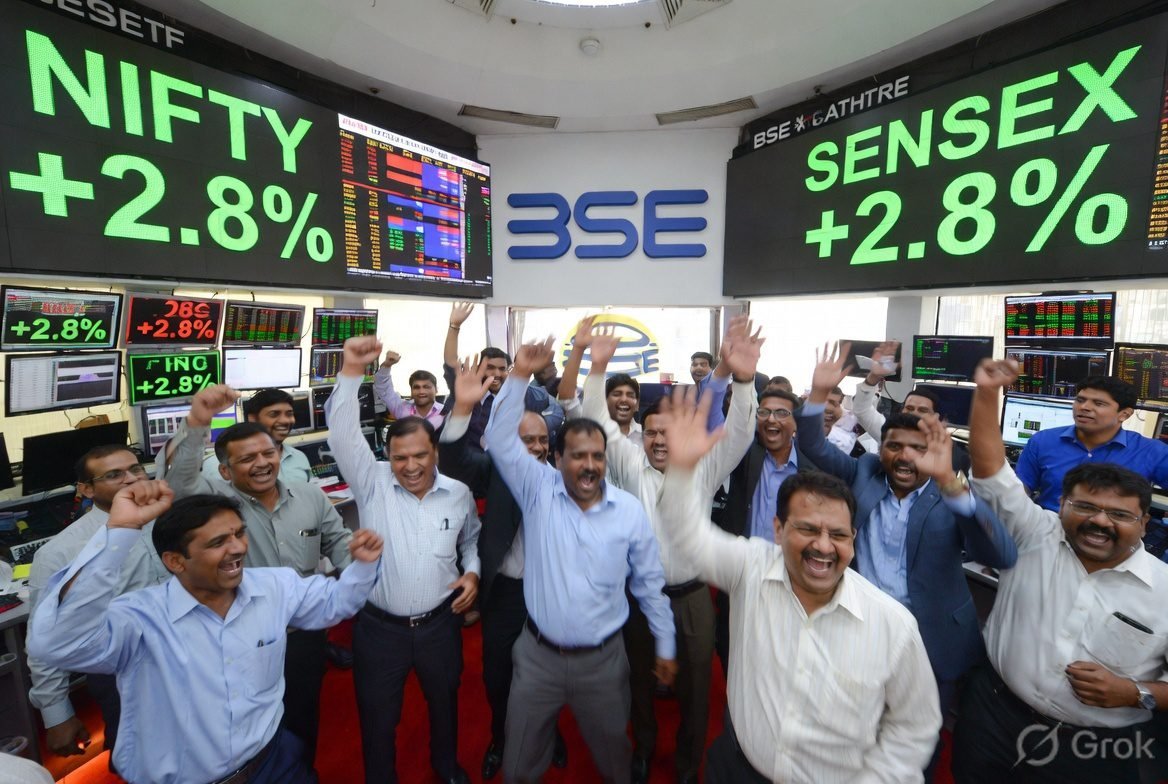
Markets reacted immediately and forcefully. The Nifty jumped roughly 2.8% in a single session, while the Sensex surged an estimated 2,000 to 4,200 points, one of its strongest days in months, according to TradingView's market reaction coverage. The rupee strengthened, and export-oriented sectors, textiles, gems and jewellery, engineering goods, led the gains.
3. Why It Came Undone: Solar Duties and a Return to 50%
Barely three weeks after the celebrated tariff cut, on February 25, 2026, the US Department of Commerce announced preliminary countervailing duties of 125.87%, rounded to 126%, on Indian crystalline silicon solar cells and modules, sending Indian solar stocks sharply lower that day.
The broader relationship also soured through the first half of 2026. Reporting from Foreign Policy indicates ties deteriorated further amid hefty US H-1B visa fees, continued friction over India's energy sourcing, and Washington's engagement with Pakistan on unrelated Middle East diplomacy. By July 2026, tariffs on Indian goods had climbed back toward 50%, according to ClearTax's July tracker, undoing much of February's relief in practice, even if the headline framework technically remained.
4. The July 22 Deadline That Changes Everything
India and the US are now racing to finalize the first tranche of a formal Bilateral Trade Agreement (BTA) by mid-July 2026, a deadline that coincides with a 10% additional duty set to expire around July 22, according to reporting on the negotiation timeline. Commerce and Industry Minister Piyush Goyal has said both sides aim to "execute a very vibrant first tranche" by the middle of the month.
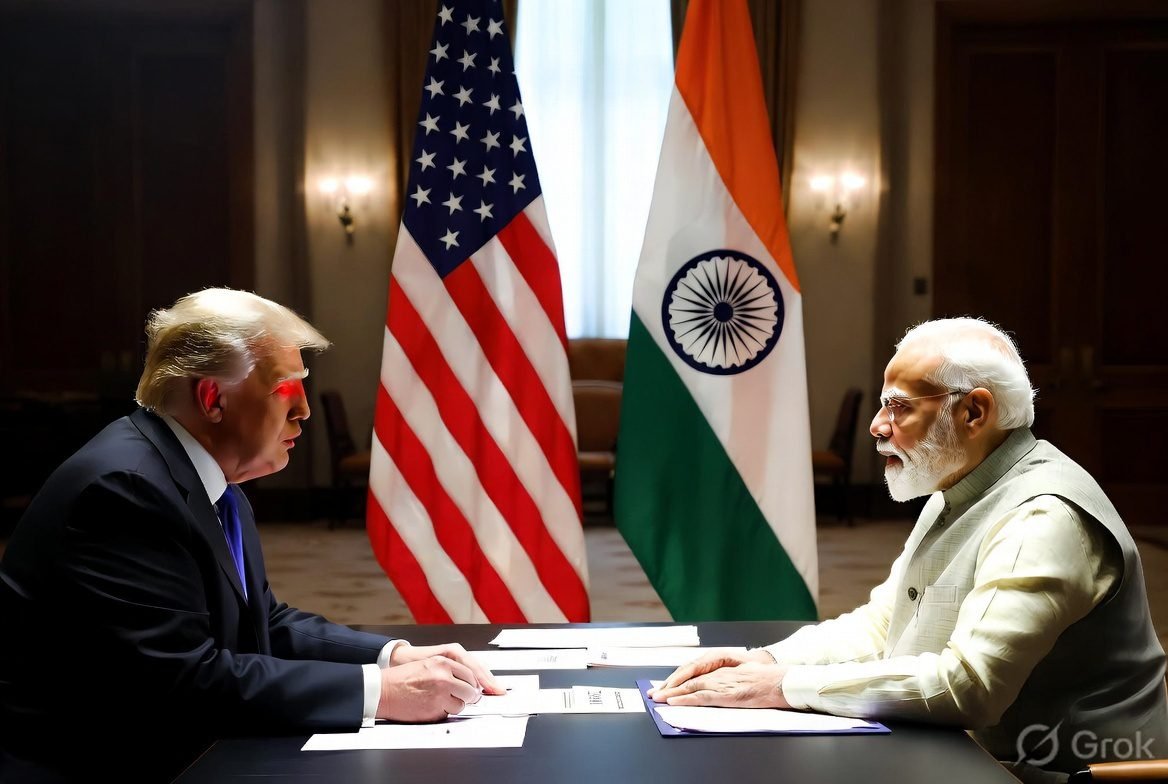
A high-level US delegation, potentially led by US Trade Representative Jamieson Greer, has been expected in India to push talks across the finish line, following a Trump-Modi conversation at the G7 summit in France in mid-June 2026, according to Bloomberg's coverage of Goyal's statements.
5. What's Still Unresolved
Two core issues remain open heading into the deadline. India is pushing to secure tariff rates lower than regional competitors like Vietnam, Bangladesh, Pakistan, and Sri Lanka, all of which face rates in the 19-20% range. Washington, in turn, wants guarantees that Indian exporters are not relying on forced labor, an issue being examined under Section 301 of the 1974 US Trade Act.
Domestically, the interim framework's opening of duty-free US corn and soybean imports has triggered farmer protests, with commodity prices for corn and soy already declining and stoking rural discontent, a dynamic worth reading alongside our coverage of monsoon-driven food inflation pressures already facing Indian households this year.
6. Who Wins If the Deal Closes: Sectors and Stocks
| Sector | Why It Benefits | Companies Cited |
|---|---|---|
| Textiles & Home Goods | Restored US order flow, price competitiveness | Trident Limited, Welspun India, KPR Mills |
| Gems & Jewellery | Lower tariffs on US retail/wholesale exports | Titan Company, Gokaldas Exports |
| IT Services | Indirect sentiment boost, reduced cross-border friction | Broad sector tailwind |
| Engineering & Auto Parts | Improved competitiveness vs regional rivals | Sector-wide |
Analysts caution this is unlikely to trigger a broad, indiscriminate rally. Markets are expected to reward companies with high US exposure, strong balance sheets, and genuine operational leverage more selectively, rather than lifting all export names uniformly.
7. Why Washington Wants This Deal Too
The US benefits from a stable, predictable India as a counterweight in its broader Asia strategy and as an alternative sourcing destination for companies diversifying away from China. India's $500 billion purchase commitment translates to roughly $100 billion annually in additional US goods, spanning energy, technology, and defense sectors, a meaningful boost for US exporters regardless of how the broader tariff picture settles.
For American consumers and businesses, a finalized deal would also mean cheaper Indian imports across textiles, jewellery, and engineering goods, directly relevant to US household budgets in categories where India competes closely with China, Vietnam, and Bangladesh.
8. What This Means for Investors
For Indian investors, export-oriented sectors remain the most direct read on how this deal resolves, alongside broader index movements covered in our Nifty and Sensex explainer. Currency dynamics matter too, since tariff relief historically strengthens the rupee, a theme explored in our Dollar Index explainer.
For US investors, this connects to the broader question of supply chain diversification away from China, relevant to how companies like those in our coverage of SK Hynix's historic Nasdaq listing are positioning across Asian manufacturing hubs more broadly.
Worth reading alongside this
This trade story intersects with other major 2026 macro themes we've covered, including the Fed rate hike watch and how TCS's Q1 FY27 results reflect broader IT sector sentiment tied to US-India business ties.
Real-World Example
Consider an investor who bought textile exporter stocks purely on February's rally headline, without tracking what happened next. That investor would have missed the solar sector's 126% duty shock just three weeks later, and the broader reversion toward 50% tariffs by July, both of which materially changed the investment case for export-heavy sectors. A more complete approach tracks the full timeline, not just the initial headline, a discipline covered in our beginner investing guide and our piece on why investors lose money reacting to single data points. More coverage is available in our Business category and Global Economy category.
9. FAQs
What is the current US tariff on Indian goods?
The tariff situation has been genuinely volatile through 2026: cut from 50% to roughly 18% in February 2026, but reported to have climbed back toward 50% by July 2026, pending the outcome of a new Bilateral Trade Agreement targeted around the July 22 deadline.
Why did Indian markets rally in February 2026?
The Nifty jumped about 2.8% and the Sensex surged 2,000-4,200 points in a single session after the February 2, 2026 announcement that tariffs would fall from 50% to roughly 18%, removing a major overhang on export-oriented Indian equities.
What happened with Indian solar exports?
On February 25, 2026, the US Department of Commerce imposed preliminary countervailing duties of approximately 126% on Indian solar cells and modules, a separate trade action that hit Indian solar stocks hard just weeks after the broader tariff relief announcement.
What is the July 22 deadline about?
A 10% additional duty on Indian imports is set to expire around July 22, 2026, giving both India and the US strong incentive to finalize the first tranche of a formal Bilateral Trade Agreement before that date.
Which Indian sectors benefit most if the trade deal succeeds?
Textiles, gems and jewellery, engineering goods, and auto parts are viewed as the most direct beneficiaries of lower tariffs, with IT services seeing an indirect sentiment boost. This is not investment advice; consult a SEBI-registered financial advisor for guidance specific to your situation.
- CryptoBriefing — India-US trade deal mid-July timeline
- ClearTax — Complete US tariff on India tracker
- Foreign Policy — US-India relations analysis
- Bloomberg — Piyush Goyal on trade deal timeline
- DSIJ — Market impact and sector opportunities
- TradingView — Market reaction coverage
- Definedge Securities — Stock market impact and sector picks
- IndMoney — Nifty reaction and competitive tariff analysis
- Office of the US Trade Representative — Official US trade policy
- Ministry of Commerce and Industry, India — Official Indian trade policy

Pranab Barman is a Financial Educator and Personal Finance Researcher with over 10 years of hands-on experience in stock markets, trading, and investing. Currently enrolled in the CFA Program, he is committed to continuous learning and professional excellence in finance.
As the Founder of PlayWithStock, Pranab covers a wide range of topics including Mutual Funds, SIP, Taxation, Stock Market Basics, and Financial Calculators — with a focus on simplifying complex financial concepts for everyday all investors.
Email: support@playwithstock.com
Website: playwithstock.com
Related posts:
 Fed Rate Hike 2026: Why the July 28-29 FOMC Meeting Could Change Everything
 SBI Mutual Fund IPO Opens Tomorrow: Everything Before You Apply
 Monsoon 2026 India Inflation: Why a Dry June Hits Grocery Bills
 ITR Filing Last Date 2026: July 31 Deadline, New Tax Act & Penalties
 Gold Price Correction 2026: What It Means for Indian Investors
 What is the Dollar Index (DXY) and Why It Matters for India
 Reliance Industries Q1 FY27 Results Preview: What to Expect on July 17
 Big Bank Earnings July 14: Alarming Preview of JPMorgan, BofA & More
1 thought on “India US Trade Deal 2026: Inside the Tariff Rollercoaster Before July 22”
reference