


The Taxation and Other Laws (Amendment) Bill, 2026: What Got Introduced in Lok Sabha Today and Why It Matters More Than It Sounds

The Taxation and Other Laws Amendment Bill 2026 is one of those bills that pass by without a single retail investor noticing — technical-sounding, buried in procedural language, unlikely to trend on anyone's feed today. And yet buried inside it are provisions that touch electronics manufacturing, offshore fund managers, UPI transaction charges, and the diamond trade in Surat. Finance Minister's team tabled it in the Lok Sabha on August 4, and we think it's worth fifteen minutes of your time to understand, even if you'll never file a return that references it directly.
Here's the short version before we go section by section: the government is trying to do three things at once with this bill — pull foreign capital toward India, extend a tax break that keeps electronics manufacturing cheap, and clean up a legal loose end left over from an ordinance issued earlier this year. None of those three goals are new. What's new is the specific mechanics the government has chosen, and a couple of those mechanics genuinely change the calculus for people running businesses that touch global money.
Why the Taxation and Other Laws Amendment Bill 2026 Exists in the First Place
Back in early 2026, the government issued the Income-tax (Amendment) Ordinance to make certain tax changes take effect immediately, without waiting for Parliament to be in session. Ordinances work that way in India — they're a stopgap, legally valid for a limited window, and they eventually need Parliament to either convert them into a proper Act or let them lapse. This bill is that conversion. It repeals the ordinance, validates everything that already happened under it, and folds in a batch of additional changes that came out of consultations with industry after the Finance Act, 2026 was passed.
The government's own framing, repeated across its statements to the Lok Sabha, is that these changes respond to "evolving geopolitical developments and disruptions in global trade and supply chains." Translated out of official language: with tariff uncertainty from the US, ongoing tension in West Asia affecting oil and shipping, and several export markets getting harder to predict, the government wants India to look like a more stable, more attractive place to park long-term capital and manufacturing right now, while other options look shakier.
The Big One: Foreign Fund Managers Can Now Operate From India

This is the provision that international tax lawyers have actually been asking for, and it's easy to miss why it matters if you're not deep in fund structuring. Under the existing rules, a foreign investment fund risked being treated as "doing business in India" — and therefore taxable here — if its fund manager happened to be sitting in Mumbai or Bengaluru rather than Singapore or Dubai. That single rule pushed a huge number of Indian-origin fund managers to physically relocate abroad just to keep their fund's tax status clean, taking high-value jobs and decision-making with them.
The amendment relaxes that condition. A fund can now have its manager based in India without automatically triggering an Indian tax presence, provided the fund itself isn't resident in India and Indian residents don't hold more than roughly 5% of the fund's total corpus. In plain terms: global funds can now hire and keep talent in India without the tax structure falling apart. The government's stated hope is that this pulls fund management jobs — and the ecosystem of lawyers, analysts, and compliance staff that comes with them — back onto Indian soil.
We'd note this sits in the same broader category as India's ongoing effort to make itself a base for financial services rather than just a market to be invested into from abroad — a shift that, if it actually plays out over the next few years, changes the kind of jobs and firms that show up in Indian financial hubs.
Electronics Manufacturing Gets a 10-Year Extension
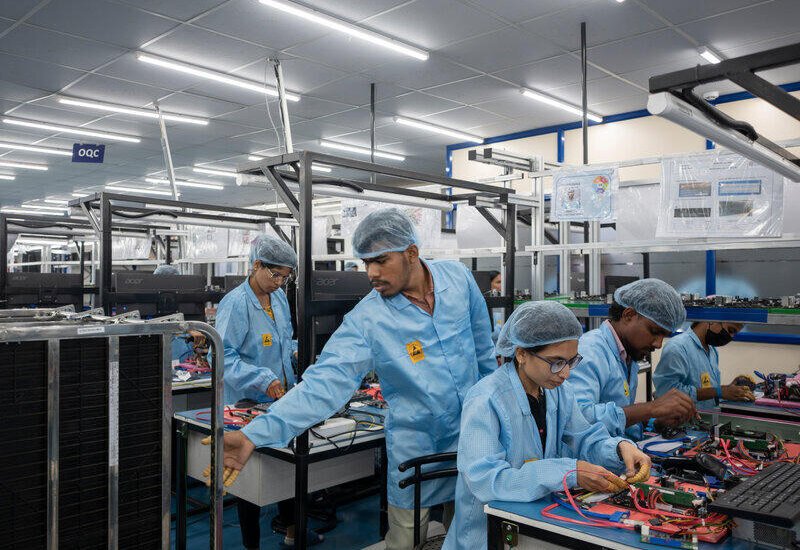
On the manufacturing side, the bill extends an existing tax exemption for foreign companies that supply machinery and tooling to Indian electronics contract manufacturers. That incentive, previously due to run out sooner, now stretches to a full 15 years, through the financial year ending March 2041. The coverage list has also been widened to explicitly include laptops, personal computers, tablets, and servers alongside the mobile phones the scheme originally targeted.
| Provision | Detail |
|---|---|
| Total exemption period | 15 years (extended from original term) |
| Runs through | Financial year ending 31 March 2041 |
| Products newly covered | Laptops, PCs, tablets, servers |
| Beneficiary | Foreign companies supplying machinery/tooling to Indian contract manufacturers |
| Data centre exemption window | Up to tax year ending 31 March 2047 |
If you've followed India's Production Linked Incentive push over the past few years, this reads as a continuation of the same logic rather than a new direction — cheaper machinery imports for the companies that assemble electronics domestically, in the hope that global brands keep expanding their India-based manufacturing rather than shifting it elsewhere. Whether that ambition translates into more listed opportunities in the electronics manufacturing services space over the coming years is worth watching, particularly for anyone already tracking the semiconductor and electronics supply chain story.
A New Exemption for the Diamond Trade
Tucked into the same bill is a fifteen-year tax exemption for foreign diamond mining companies and related entities selling rough diamonds through notified trading zones — specifically pointing at Mumbai and Surat. India already cuts and polishes a huge share of the world's diamonds; this provision is aimed squarely at getting more of the actual rough-diamond trading activity to happen inside India as well, rather than in Antwerp or Dubai. Surat, which already handles a substantial share of global diamond cutting, stands to gain the most if international sellers start routing rough stones through Indian trading zones instead of overseas exchanges.
The Quieter Change: UPI and Digital Payment Charges
Away from the headline investment provisions, the bill also touches the Payment and Settlement Systems Act, 2007 — the law governing UPI, IMPS, and card networks in India. The amendment strips out references to the Income-tax Act inside provisions dealing with electronic payment modes, and hands the central government explicit power to notify which digital payment methods banks and payment system providers are barred from charging fees on.
This sounds procedural, but it's worth reading carefully if you run any kind of business that accepts digital payments. The government has kept UPI transactions fee-free for years as a policy choice, and this amendment appears to be tidying up the legal basis for that decision so it sits more cleanly outside tax law. For sellers and small businesses already navigating a shifting compliance landscape — including the GST changes we've covered in our guide to how GST 2.0 is affecting e-commerce sellers — this is one more thread in the same fabric: digital payment infrastructure and tax policy in India are increasingly being written and amended together, not as separate tracks.
What This Doesn't Change
It's worth being clear about what this bill is not. It isn't a fresh Union Budget, it doesn't touch personal income tax slabs, and it makes no changes to how salaried individuals or most small investors file their returns. If you're filling out an ITR this season and wondering whether any of this affects your own paperwork, the honest answer for the overwhelming majority of readers is no — these provisions target foreign funds, large manufacturers, and diamond traders operating through notified zones, not the retail investor tracking a mutual fund portfolio or a handful of individual stocks.
That said, if your income involves foreign assets, offshore fund units, or business income tied to any of the sectors mentioned above, this is exactly the kind of legislative change that eventually shows up as a line item you need to disclose correctly. Anyone with investment income streams complex enough to need it should already be comfortable with tools like our ITR-4 investment disclosure calculator, since bills like this one tend to filter down into disclosure requirements well before most taxpayers notice the change happened at all.
The Bigger Picture This Bill Sits Inside
None of these provisions arrive in a vacuum. India's manufacturing and investment policy through 2026 has been shaped almost as much by what's happening outside the country as by what's happening inside it. On the manufacturing side, Indian IT and technology-adjacent sectors are simultaneously dealing with US immigration cost pressure — our coverage of the H-1B $100K visa fee's impact on Indian IT stocks is a useful companion read here, because it shows the flip side of the same coin: while this bill tries to pull manufacturing and fund management activity toward India, a separate US policy move is simultaneously making it costlier for Indian IT firms to deploy talent inside the United States. Companies and investors are navigating both pressures at the same time, not one in isolation.
On the investment side, this bill's fund-manager relaxation arrives against a backdrop where India has already been positioning itself, through various channels including GIFT City, as a jurisdiction that wants to host financial services activity rather than just receive investment from elsewhere. Whether this specific bill moves that needle meaningfully will depend on how the rules are actually implemented once the bill clears Parliament, and on whether global fund managers find the 5% Indian-resident-investor cap and the "not resident in India" test for the fund itself workable in practice.
Where This Bill Goes From Here
Introduction in the Lok Sabha is only the first formal step. From here, the bill typically moves through debate, possible committee review, passage in the Lok Sabha, transmission to the Rajya Sabha, and presidential assent before it becomes law. Given that this Monsoon Session of Parliament has already seen its share of disruption over unrelated political issues, the timeline for this bill clearing both houses isn't fixed, though tax legislation tied to an expiring ordinance tends to move with more urgency than routine bills, since the ordinance itself has a legal shelf life.
We'll update this piece once the bill either passes in its current form or picks up amendments during debate — legislative text has a habit of shifting between introduction and final passage, and the version that eventually gets notified as law is the one that actually matters for anyone relying on these provisions.
What Investors Tracking Specific Sectors Should Watch
If you hold positions in electronics manufacturing services, contract manufacturers, or ancillary suppliers, the extended exemption window is worth folding into your longer-term thesis on that space rather than reacting to it as a single catalyst. Tax exemptions for foreign machinery suppliers don't directly move a listed Indian company's share price on the day they're announced — the effect, if any, shows up gradually through lower input costs and, potentially, more foreign partners willing to set up supply relationships with Indian assemblers over the coming years. Readers who've followed our semiconductor sector analysis will recognise this as the same slow-burn pattern that's been playing out across India's broader electronics and chip ecosystem.
The fund-manager relaxation is a different kind of signal entirely — it's not about any single stock, it's about India's positioning as a jurisdiction. If it works as intended, the visible effect over the next few years would be more asset management firms opening genuine India offices rather than treating the country purely as a place to source capital from. That's a slower, more structural story, closer in spirit to how GIFT City has been positioned, and it's worth revisiting a year or two from now to see whether fund managers actually respond to the changed incentive or whether other frictions keep the relocation numbers modest.
A Note on How These Bills Typically Get Covered — and Why We're Covering It Differently
Most coverage of a bill like this, published the same day it's introduced, tends to either summarise the government's press release without much added context, or skip straight to speculation about market impact that's genuinely premature at the introduction stage. We've tried to do neither here. A bill on day one of its legislative journey is a statement of intent, not a settled outcome — the specific percentage thresholds, the exact list of covered products, and even entire clauses can shift by the time this reaches its final form. What's useful to understand today is the direction and the mechanics, not a set of numbers to build a trading decision around.
That's also why we've deliberately not tried to predict which stocks "win" from this bill in the short term. Legislative tailwinds for a sector are real over a multi-year horizon, but treating a same-day bill introduction as an actionable trading signal is exactly the kind of behavioural mistake that tends to cost retail investors money — chasing a headline before the underlying mechanics are even finalised. If you want a deeper look at that pattern, our piece on behavioral mistakes in stock trading covers it in more detail, and the same logic that applies to headline-chasing around quarterly results applies just as well to legislative news like this.
Frequently Asked Questions
It's a bill introduced in the Lok Sabha on August 4, 2026, that amends the Income-tax Act, 2025, the Finance Act, 2026, and the Payment and Settlement Systems Act, 2007. It repeals an earlier ordinance and adds new tax provisions covering offshore fund managers, electronics manufacturing, and the diamond trade.
No. The bill does not alter personal income tax slabs or standard filing requirements for salaried individuals or typical retail investors. Its provisions target foreign investment funds, electronics manufacturers, and diamond traders operating through notified zones.
It relaxes the condition under which a fund manager based in India causes an offshore fund to be treated as doing business in India, provided the fund itself isn't Indian-resident and Indian residents hold no more than roughly 5% of the fund's corpus. This is intended to let global fund managers relocate to India without triggering unwanted tax consequences for the funds they manage.
It's extended by 10 years, bringing the total exemption period to 15 years, running through the financial year ending March 2041, and now explicitly covers laptops, personal computers, tablets, and servers in addition to mobile phones.
The bill amends the Payment and Settlement Systems Act, 2007 to remove references to the Income-tax Act in provisions on electronic payment modes and gives the central government explicit authority to notify which digital payment methods cannot be charged fees by banks or payment system providers.
Not yet. As of August 4, 2026, it has only been introduced in the Lok Sabha. It still needs to pass through debate, both houses of Parliament, and receive presidential assent before becoming an Act.
It replaces the Income-tax (Amendment) Ordinance, 2026, which was issued earlier in the year and needs to be converted into a proper Act of Parliament or allowed to lapse. The government has tied this to a broader goal of providing tax certainty and attracting foreign capital amid global trade uncertainty.
It grants a 15-year tax exemption to foreign diamond mining companies and related entities selling rough diamonds through notified trading zones in Mumbai and Surat, aimed at positioning India as a larger hub for global rough diamond trading.
Related Reading on Play With Stock
GST 2.0 Impact on E-commerce Sellers · ITR-4 Investment Disclosure Calculator · H-1B $100K Visa Fee: Impact on Indian IT Stocks · ITR Filing Last Date 2026 · Tax-Loss Harvesting in India · Revised ITR Deadline: 12 Months · Semiconductor Sector India Analysis 2026 · IT Sector Analysis: AI-Led Recovery 2026 · GST Registration for Small Business · India-US Trade Deal 2026 · RBI MPC August 2026: Market Today · US Generic Drug Tariff: Pharma Stocks 2026 · Section 244A Refund Interest Calculator · ITR Refund Status Kaise Check Kare 2026 · Crypto Bookkeeping for Tax in India · India-UK Trade Deal 2026: CETA Stocks · Nifty 50 and Sensex Explained · FII vs DII Explained · GST 2.0: What Changed for Sellers · What Is Sector Rotation
Official & External Sources
PRS India — Bill Track · Income Tax Department, Government of India · Sansad — Lok Sabha Official Site · Ministry of Finance, Government of India · Reserve Bank of India · Securities and Exchange Board of India · Business Standard · Business Today · ANI News · GIFT City — Official Website · Invest India — Official Portal · Mint — Business News · Moneycontrol · The Economic Times · National Payments Corporation of India (NPCI)

Pranab Barman is a Financial Educator and Personal Finance Researcher with over 10 years of hands-on experience in stock markets, trading, and investing. Currently enrolled in the CFA Program, he is committed to continuous learning and professional excellence in finance.
As the Founder of PlayWithStock, Pranab covers a wide range of topics including Mutual Funds, SIP, Taxation, Stock Market Basics, and Financial Calculators — with a focus on simplifying complex financial concepts for everyday all investors.
Email: support@playwithstock.com
Website: playwithstock.com
Related posts:
 PM-SYM vs APY vs NPS-Traders: Which Pension Scheme Is Actually Yours
 What Happens to Your EPF When You Change Jobs
 Ship Crossings Through Hormuz Dropped From 93 to 17 in Three Weeks — What That Means for Your LPG, CNG, and PNG Bill
 What is a Stock Split and Why Do Companies Do It
 Q1 FY27 Earnings Season: 140+ Companies — Complete Weekly Results Calendar
 Fed Rate Hike 2026: Why the July 28-29 FOMC Meeting Could Change Everything
 India Crypto Tax Notices: 44,000 Investors Just Got a Letter
 Crypto Tax Rules India Budget 2026: TDS, Loss Set-Off & What Actually Changed